Ballast
A bass that stays out of the kick's way.
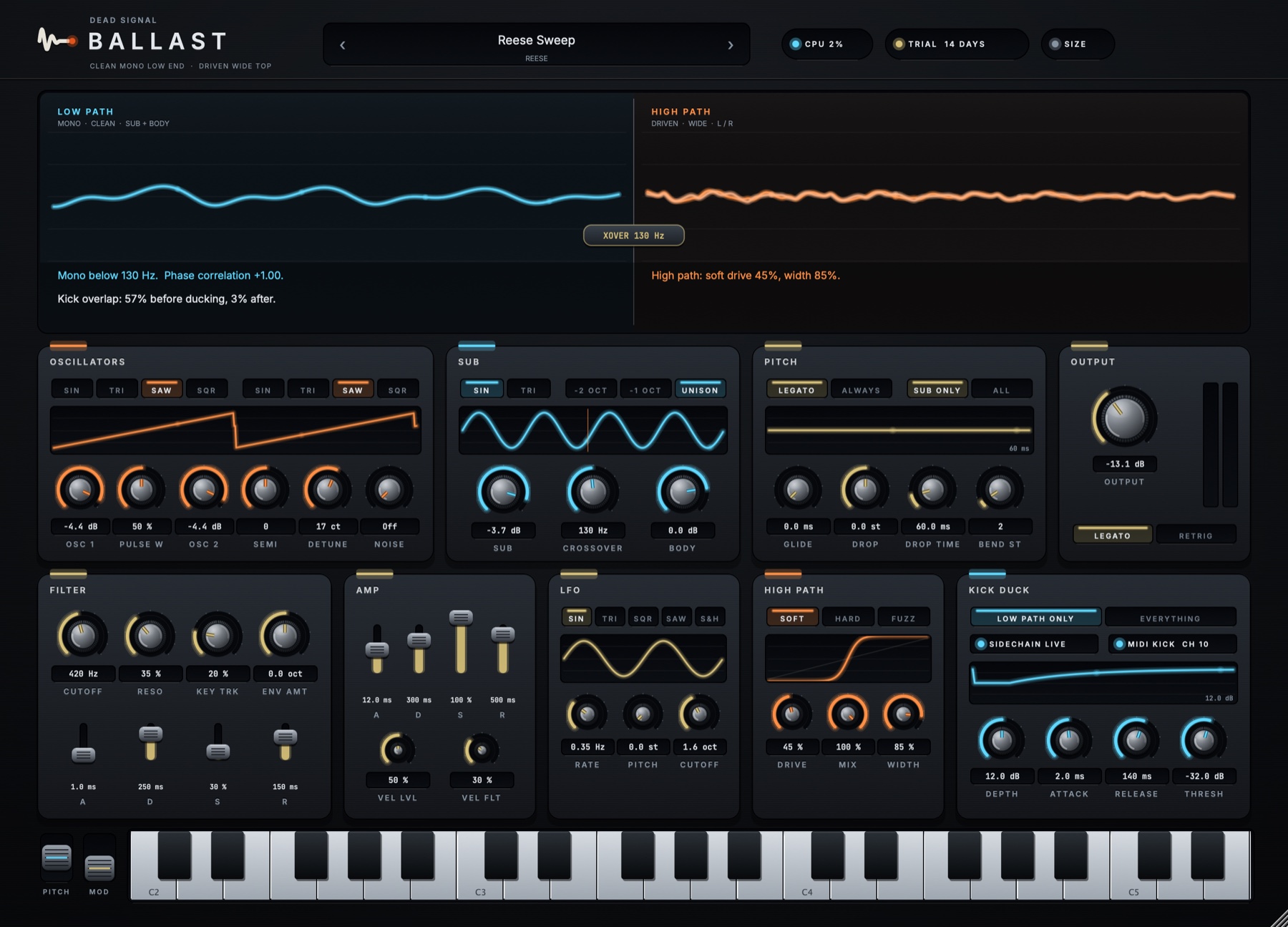
Everything below the crossover stays clean and mono, however hard you drive the top or however wide you spread it. Then it ducks around your kick and tells you what it did.
$29 $49 early launch price through Dec 1514-day free trial14-day refund
1,500+ downloads of our five free plugins and 410+ producers on the list
Out now · $29 early launch price through Dec 15 · Mac + Windows
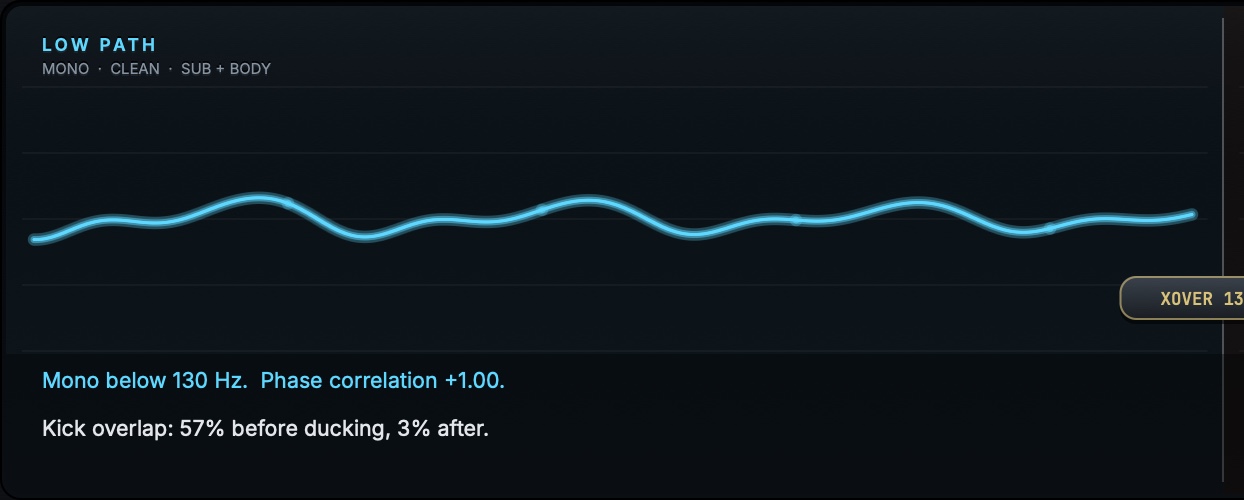
It tells you what it is doing.
Mono below 130 Hz. Phase correlation +1.00. How often the bass fought the kick before and after ducking. The readout under the display says it in plain words while you play.
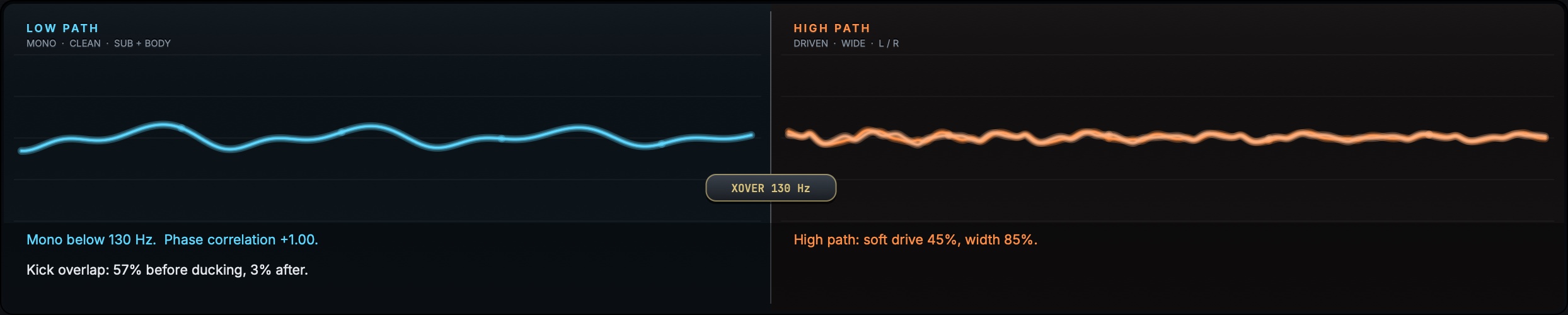
Two paths, one display.
The low path (sub and low body) is clean and mono. The high path takes the drive and the width. Drag the crossover on the display and watch both change.
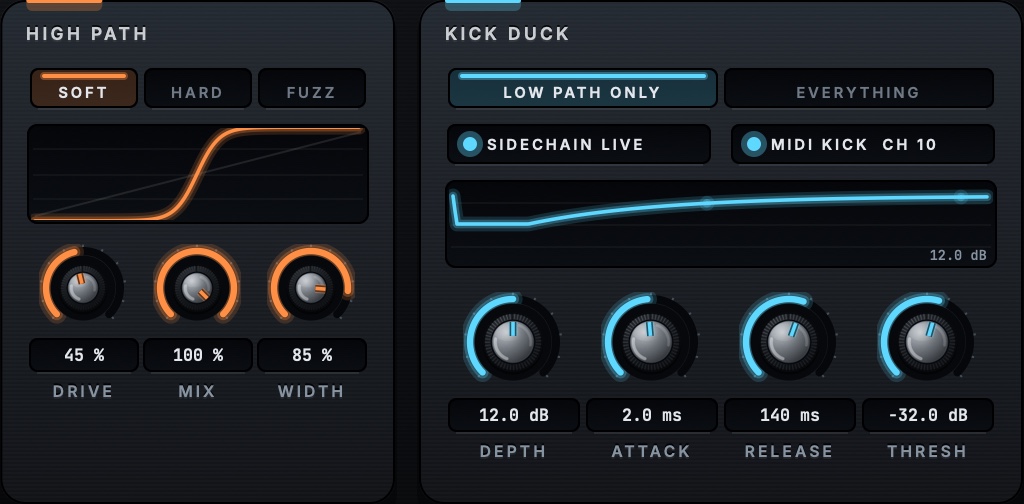
Drive and width, only up top.
Soft, hard or fuzz, with anti-aliasing and automatic level compensation, then a stereo spread that never reaches the lows. Turn both to 100% and the low end still sums to mono.
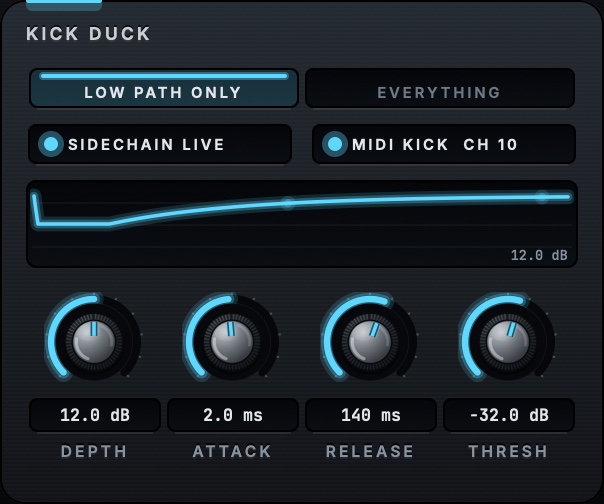
Out of the kick's way.
Route your kick to the sidechain, or play kick notes on MIDI channel 10. The low path ducks around it, up to 24 dB, and the readout shows the overlap before and after.
Everything inside.
The details, the demos and the numbers we measured.
Clean below.
Wild above.
A split you can see
A 4th-order crossover splits every note. The low path (sub and low body) is a clean mono signal. The high path gets the drive and the width. The display shows both, live.
Drive that stays up top
Soft, hard or fuzz, with anti-aliasing and automatic level compensation, so more drive adds dirt, not volume. A steep filter keeps its harmonics out of the lows.
Width that keeps the mono sum
The stereo spread only touches what is above 1.5 times the crossover. Turn WIDTH to 100% and the lows still sit dead centre.
Kick ducking
Route your kick to the sidechain input, or play kick notes on MIDI channel 10. The low path ducks around it, up to 24 dB, with the attack, release and threshold you set.
It tells you what it is doing
Under the display: mono below how many Hz, the phase correlation of the lows, the drive and width settings, and how often the bass fought the kick before and after ducking.
808s and slides
A pitch-drop envelope on the sub, glide that works only on legato notes or always, and a sub you can set to sine or triangle, one or two octaves down.
Two oscillators, a real filter
Saw, square, triangle and sine with pulse width, detune and noise, into a 24 dB filter with its own envelope, key tracking and velocity.
Play it from the screen
A keyboard, a pitch wheel that springs back and a mod wheel that opens the filter. It also follows the pitch bend and mod wheel (CC 1) from your MIDI keyboard.
57 patches, level-matched
808s, subs, reeses, distorted basses, plucks, wobbles, acid lines, synth basses and textures. Every one is set to the same loudness, so you pick by ear.
What we measured.
| Test | Result |
|---|---|
| Lows with WIDTH and DRIVE both at 100%: left/right correlation | 0.999 |
| Mono sum loss with WIDTH at 100% | 0.26 dB |
| DRIVE at 100%: movement of the 49 Hz fundamental | 0.21 dB |
| Kick duck: time to reach the set 12 dB | under 50 ms |
| Tuning across four notes, two octaves | within 0.5 cent |
| CPU with everything on and a sidechain running | about 1.6% of one core |
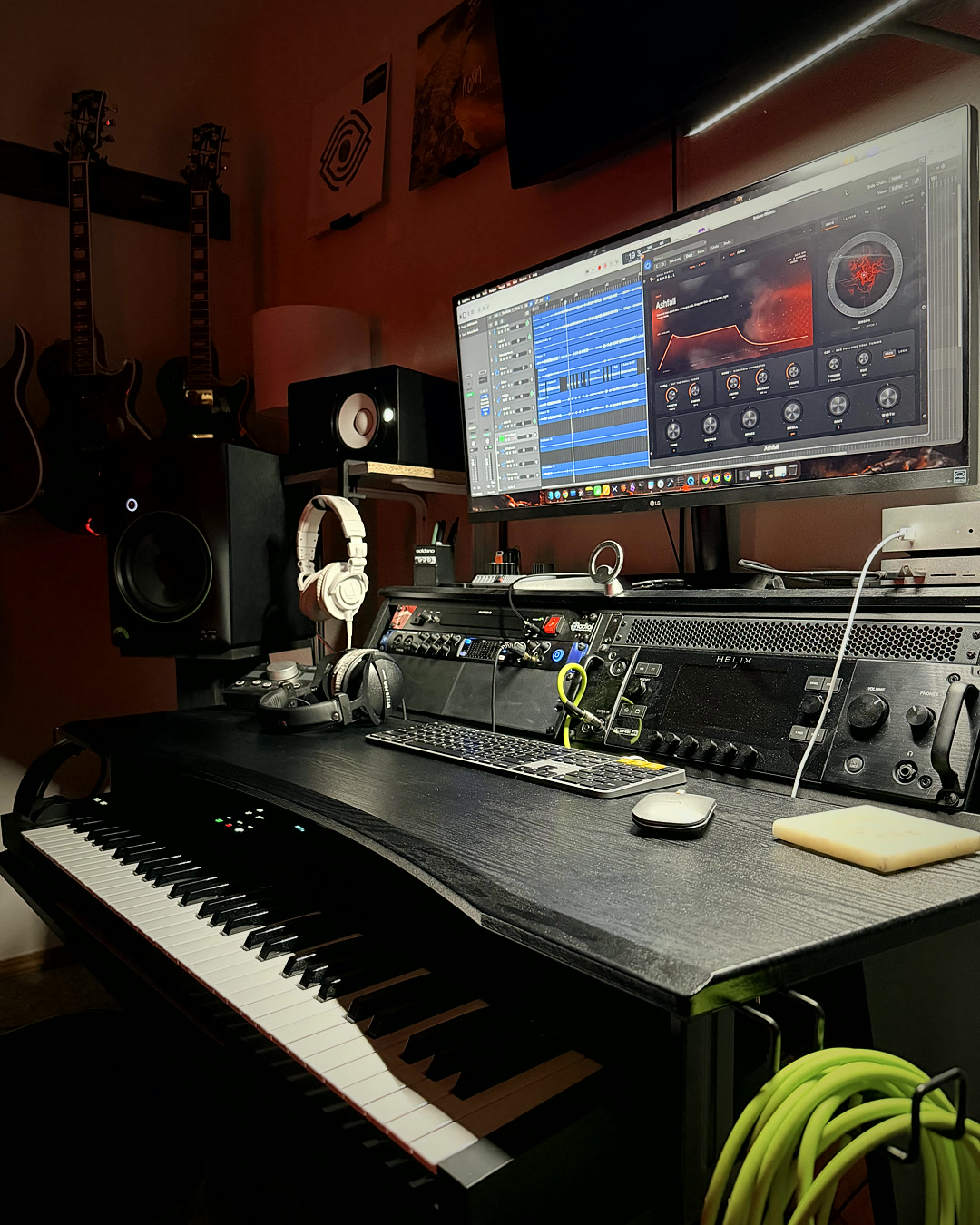
Made in one studio,
tested on real mixes.
Every Dead Signal plugin is built, mixed with and listened to here before it ships, then backed by a 14-day refund, plus a 14-day free trial on the main paid plugins.
Ballast is out now.
We're launching early. The price is $29 through December 15, then $49. Try it free for 14 days first, and if it isn't for you, get your money back within 14 days.
SANDBOX CHECKOUT: test mode, no real money
Secure checkout by Paddle. Your license key appears as soon as payment clears.
Try it first: Mac trial · Windows trial (email needed). Full plugin for 14 days, then it is silent until you unlock it. Install help