Less guessing. Better mixes.
Find the problem you hear. Make one deliberate move. Keep it only if the mix gets better.
Browse by category.
Sorted by the problem you are hearing.
Find your next fix.
Starting points for real sessions. Always judge in context.
79 notes
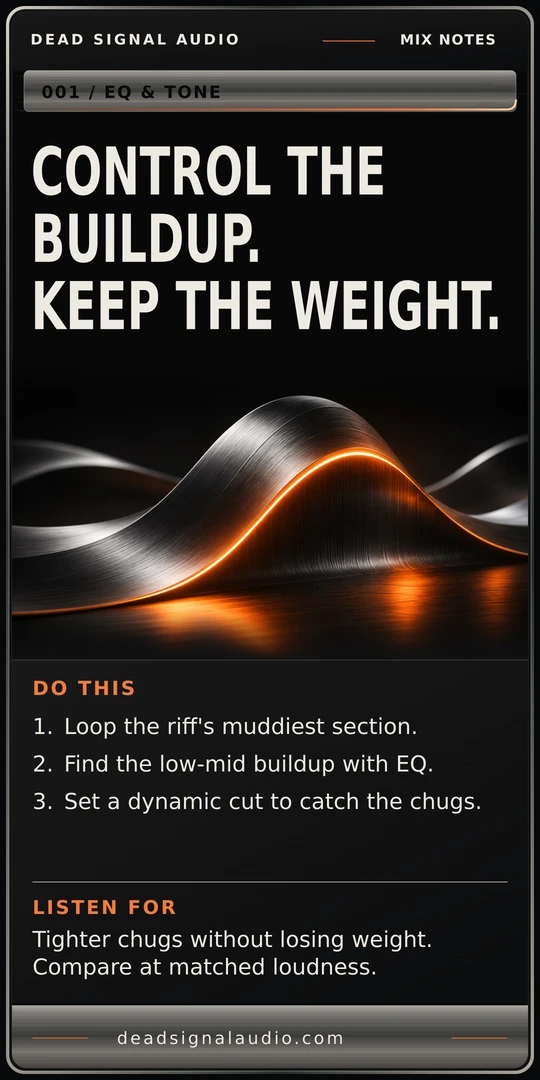
Muddy chugs aren't your amp.
Palm mutes swell into a low-mid blanket while open notes stay balanced.
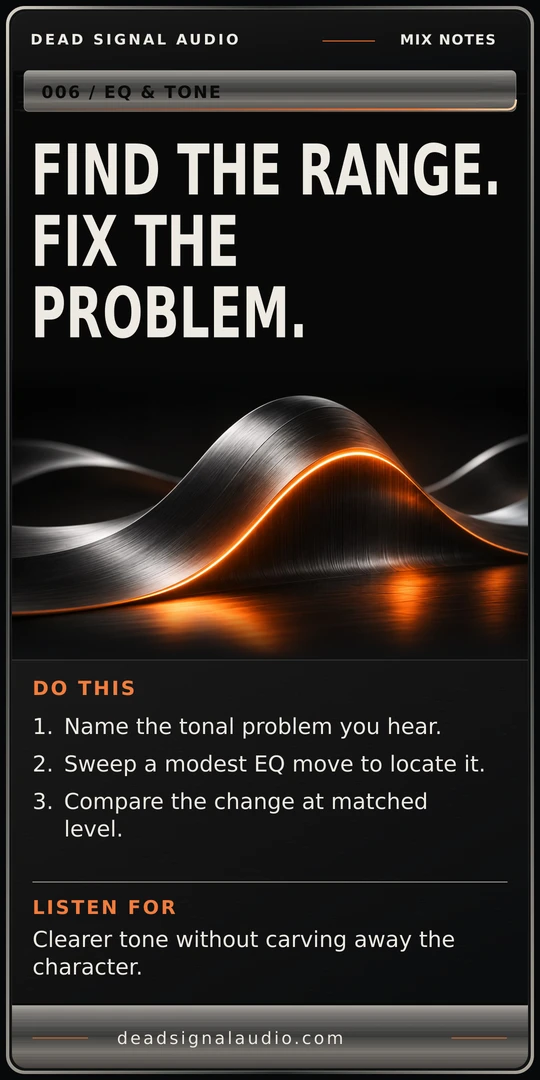
The mix frequency map.
You can hear a tonal problem but do not know where to begin searching.
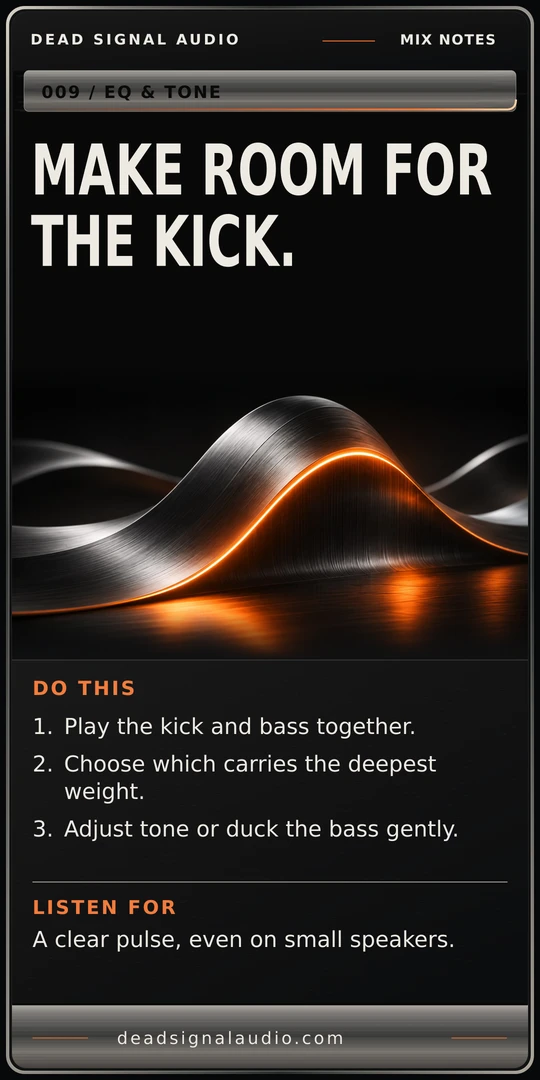
Make room for the kick.
Kick and bass can mask one another when they arrive in the same low-frequency region.
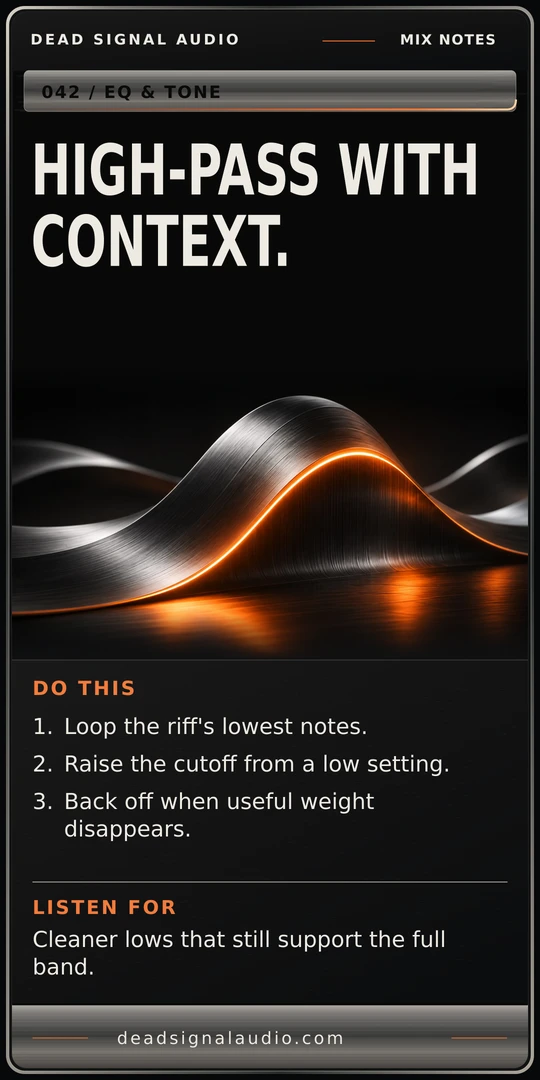
High-pass your guitars with context.
A fixed cutoff ignores tuning, filter slope, and the bass arrangement.
Harsh only on the chorus?
A fixed EQ cut can darken verses that were already balanced.
Find the box in your room recording
A small room can leave a hollow, enclosed sound in a close recording.
The low-pass slope changes the answer
Two filters at the same cutoff can remove very different amounts of guitar fizz.
EQ before drive or after?
Distortion responds to the spectrum you feed it, then generates more harmonics.
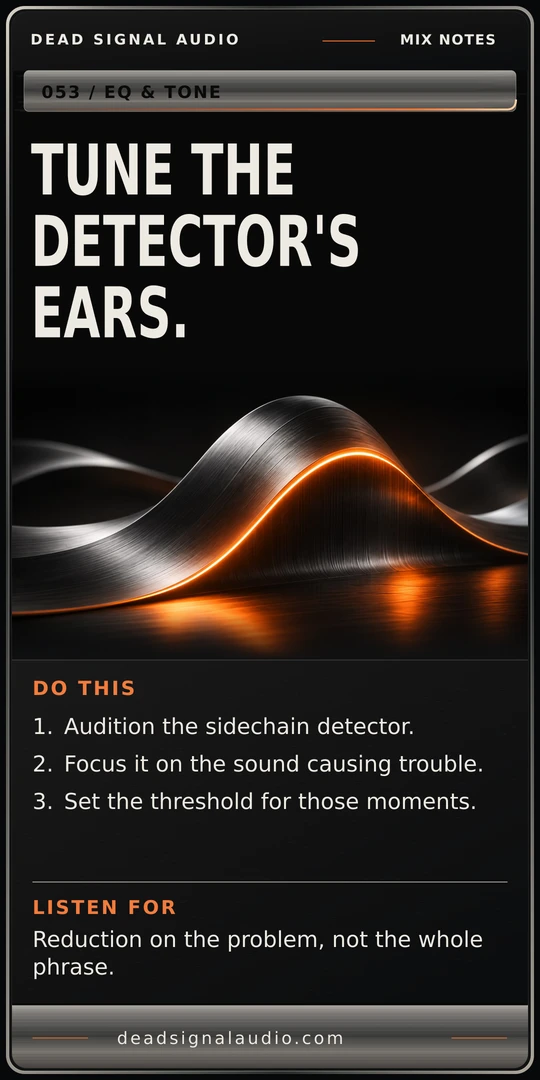
Use the sidechain's ears
A dynamic band can react to the wrong part of a busy signal.
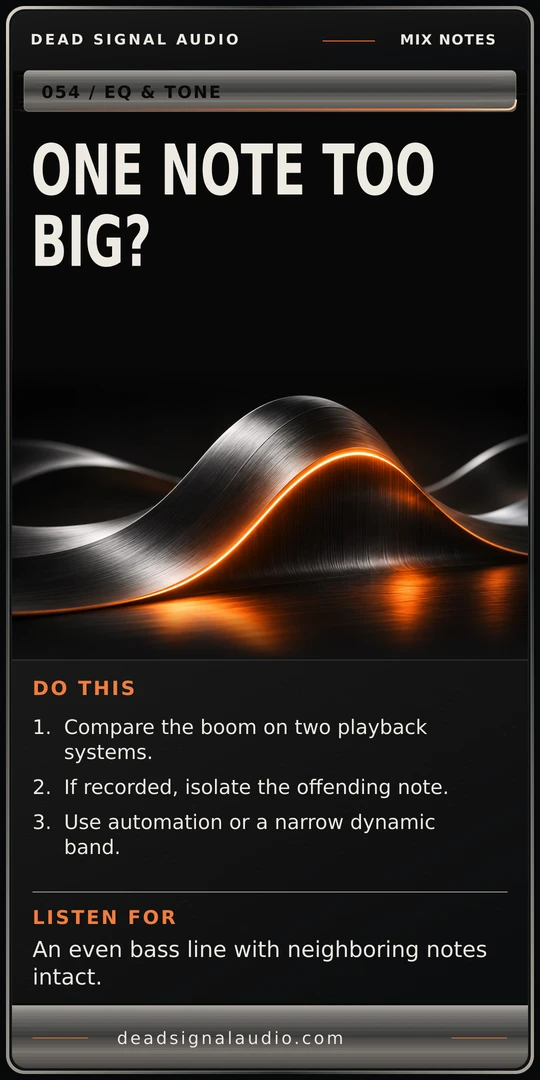
One bass note keeps booming
A single pitch may excite a resonance while neighboring notes sound balanced.
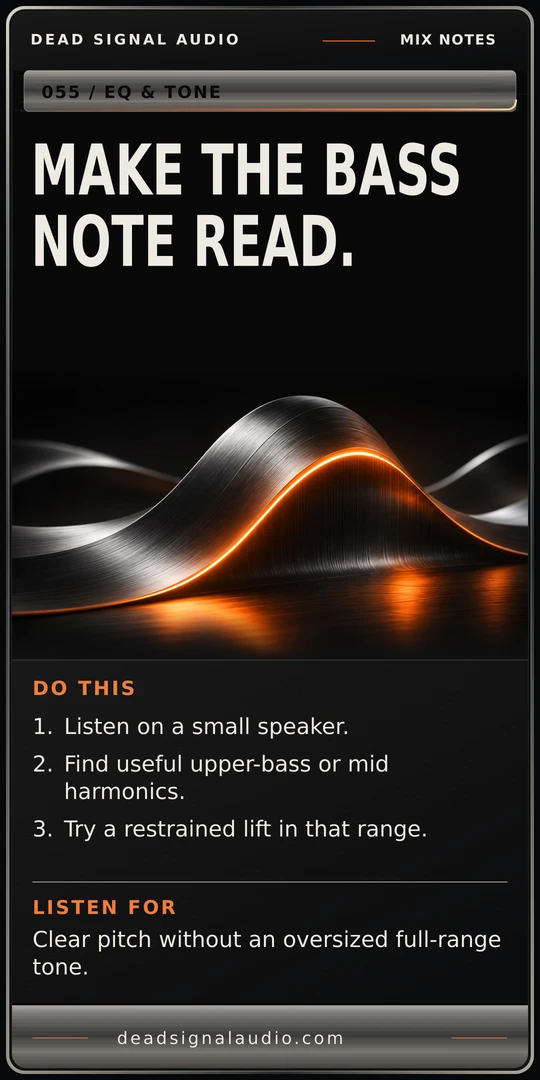
Boost the useful harmonics
A bass can be loud in the sub yet hard to follow on small speakers.
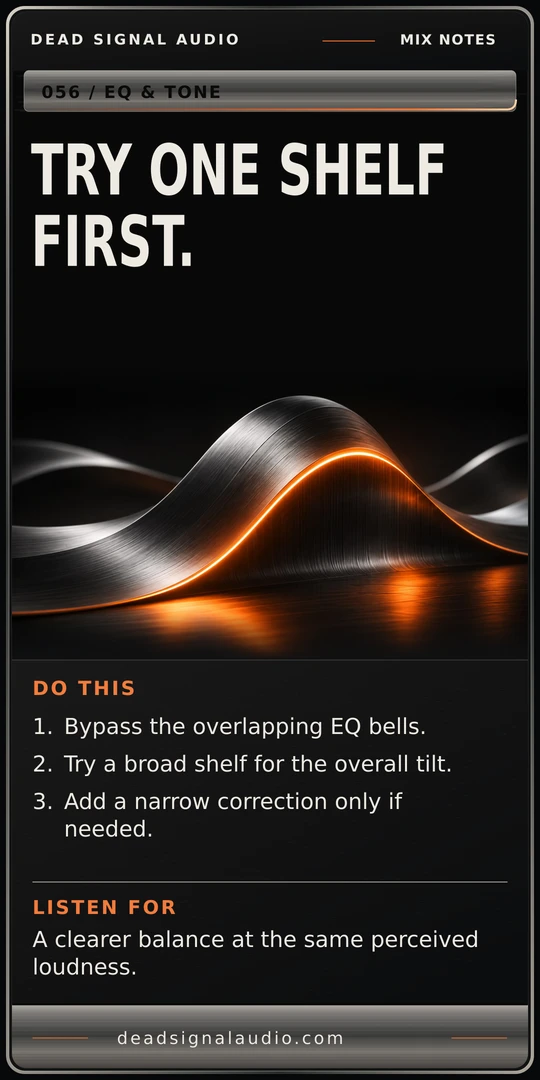
A shelf can beat six bells
Many overlapping EQ bands can make a simple tonal problem hard to judge.
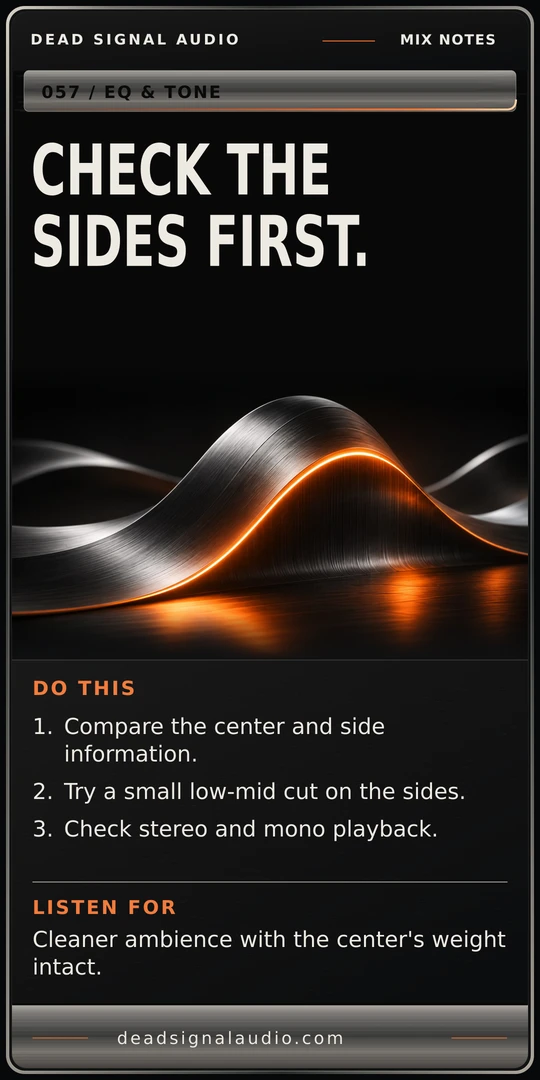
Check the sides before cutting the center
Stereo ambience may carry the mud while the lead in the center sounds clean.
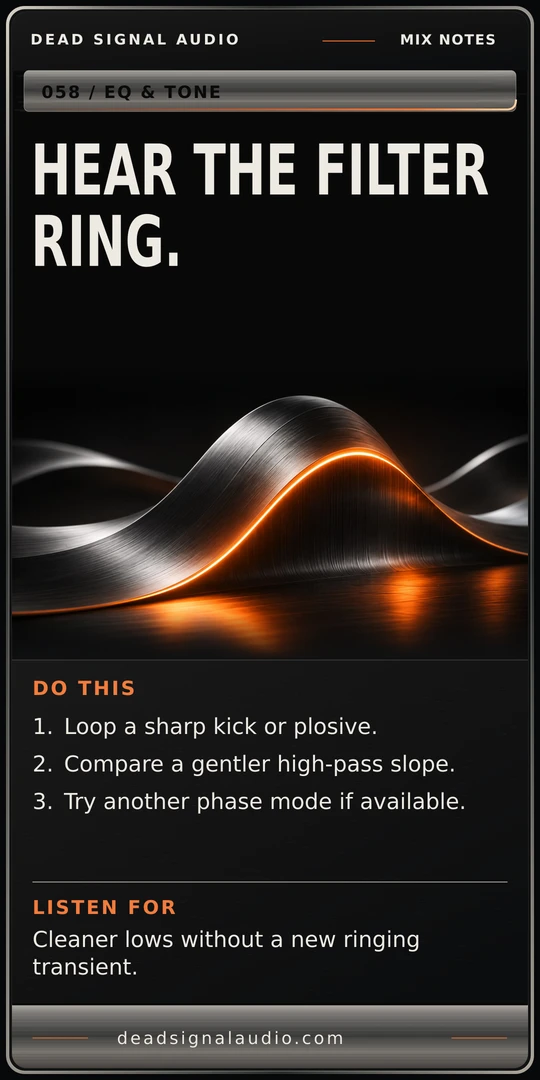
A sharp high-pass can ring
A steep filter may change the transient or add audible ringing near its cutoff.
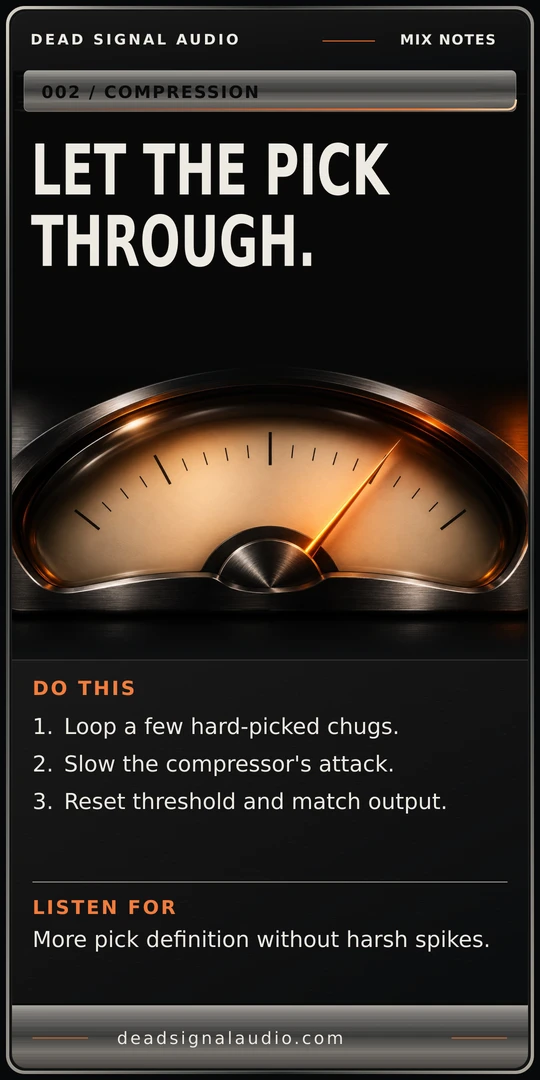
Your compressor might be flattening your chugs.
A fast compressor can reduce the pick transient on already distorted guitars.
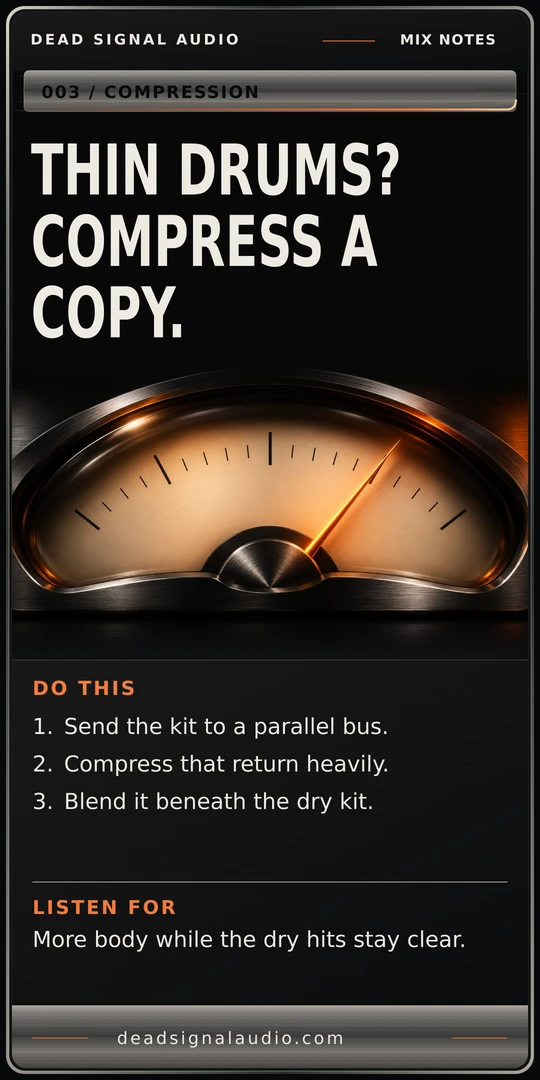
Thin drums? Compress a copy.
Heavy compression on the whole kit can flatten the hits you wanted to preserve.
Attack and release starting points, by source.
The same envelope settings do not suit every instrument or performance.
Stop the kick driving the whole compressor
Every kick pulls the vocal and cymbals down with the mix bus.
Soft knee, smoother entrance
Compression becomes obvious whenever a phrase crosses the threshold.
Stereo linking changes the image
A hard hit on one side can pull the stereo image around.
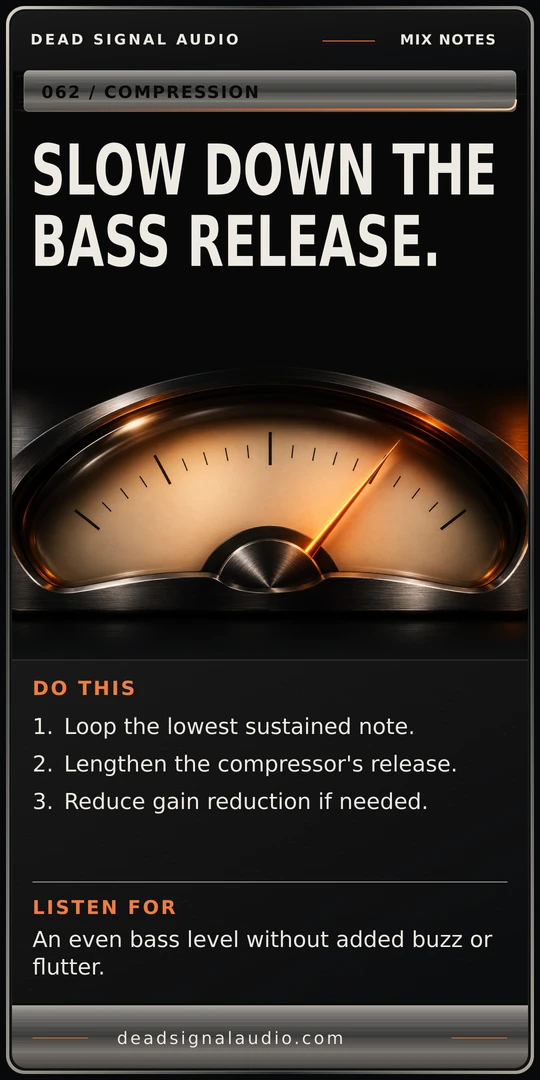
Your bass release is distorting
Very fast gain changes on low notes can add roughness.
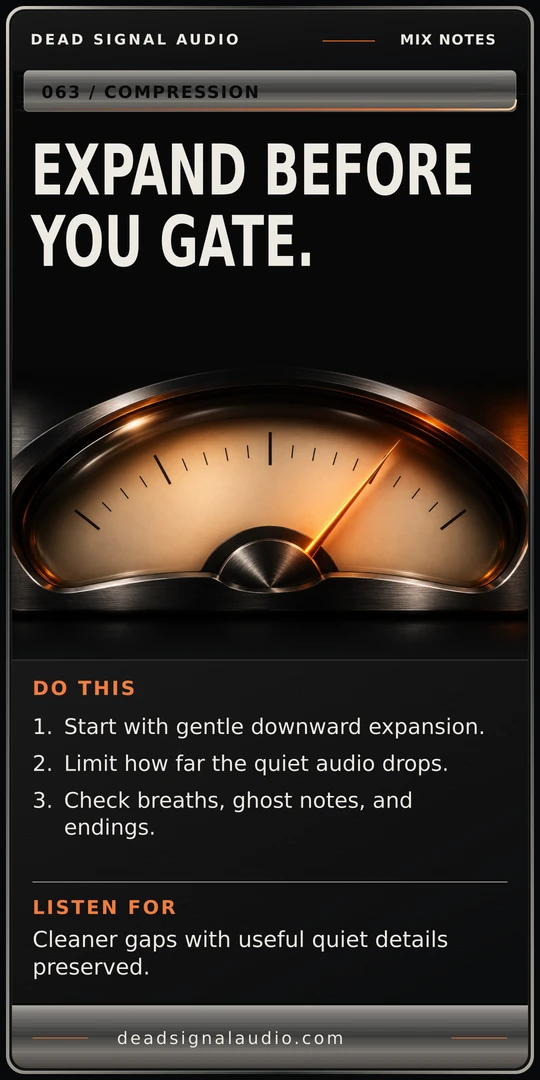
Expand gently before you gate hard
A hard gate makes quiet details vanish abruptly.
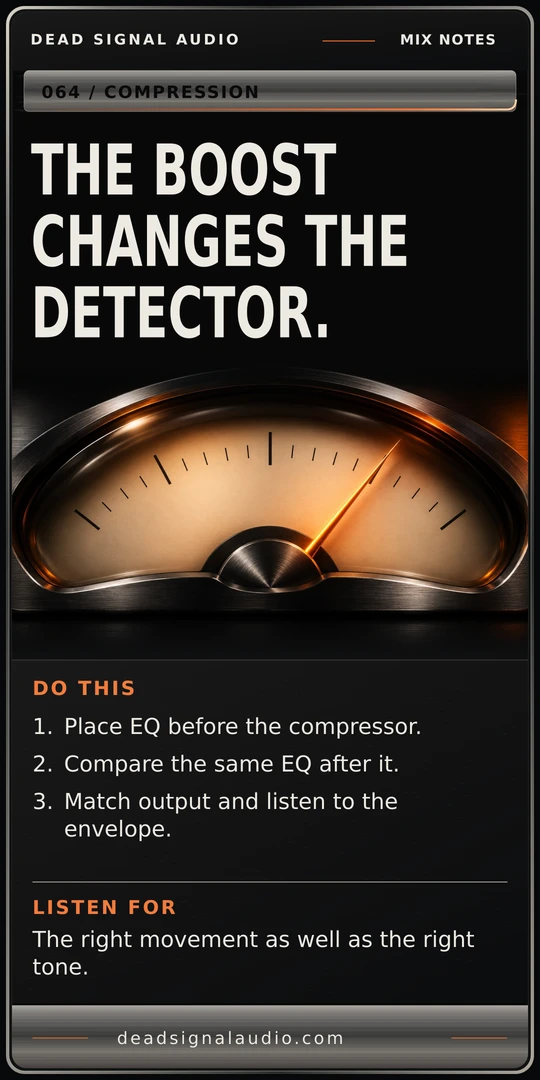
The detector hears the boost
An EQ boost before a compressor can change which frequencies cause reduction.
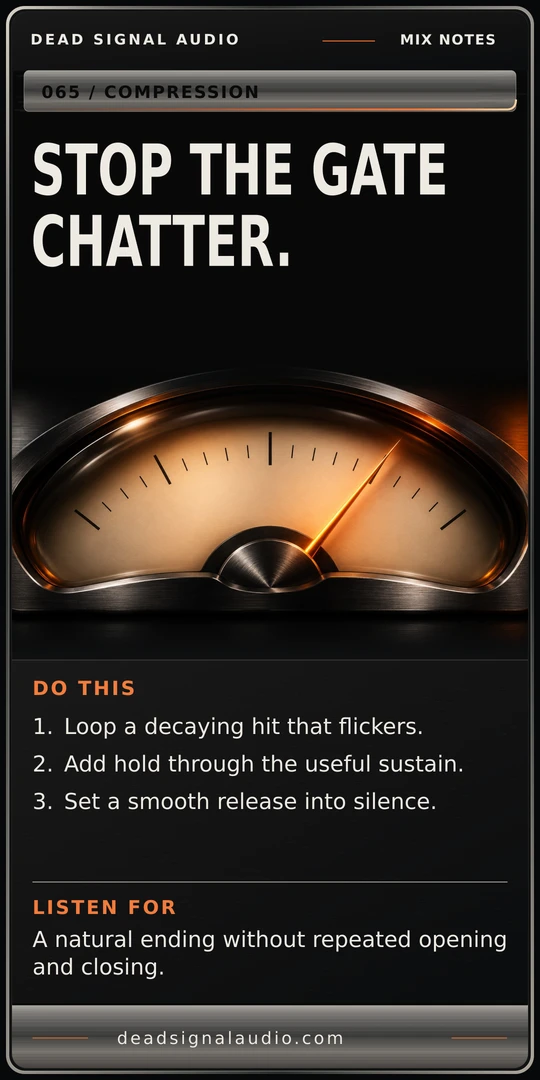
Use hold to stop gate chatter
A gate rapidly opens and closes around a decaying hit.
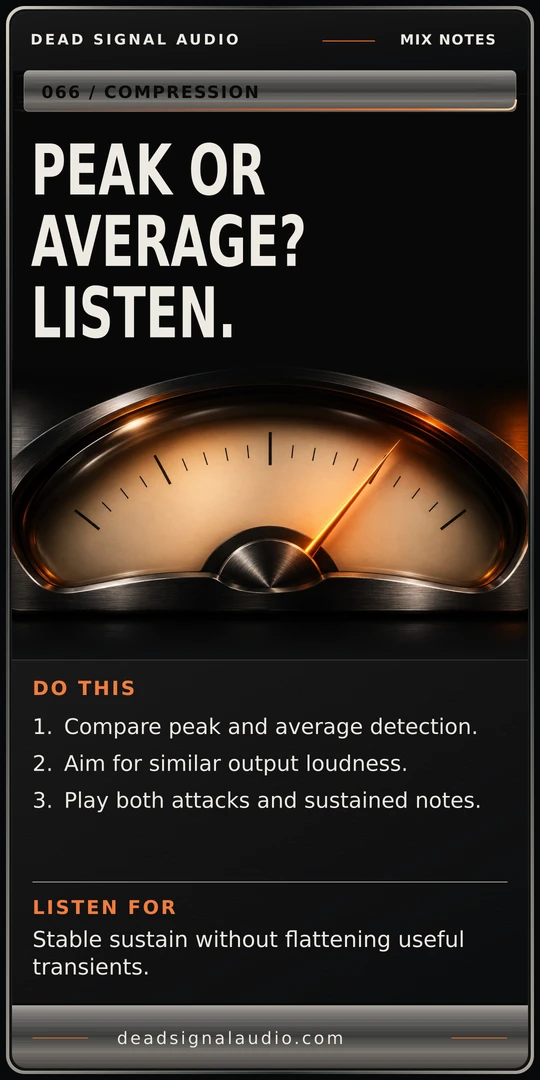
Peak and RMS tell different stories
A compressor may chase brief spikes when you want steady phrase control.
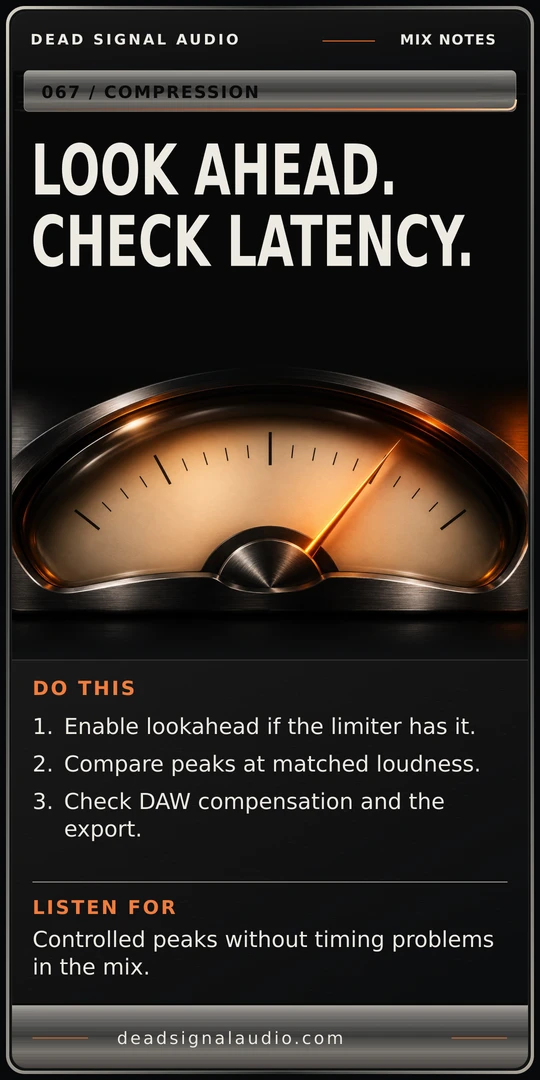
Lookahead costs time
A limiter can miss fast peaks unless it can react before they arrive.
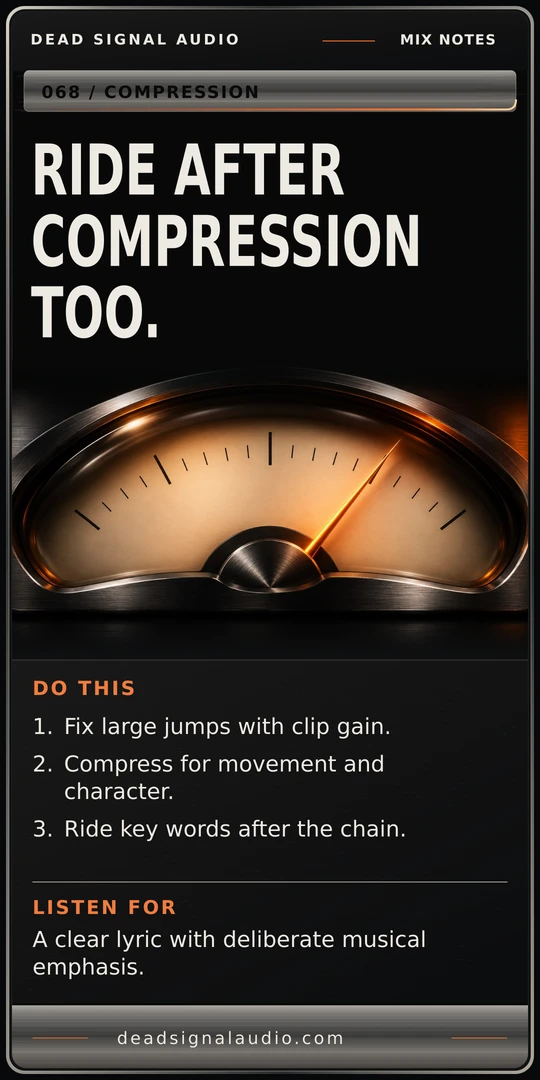
Automation belongs after compression too
Pre-compression rides help the detector, but the final vocal still needs emphasis.
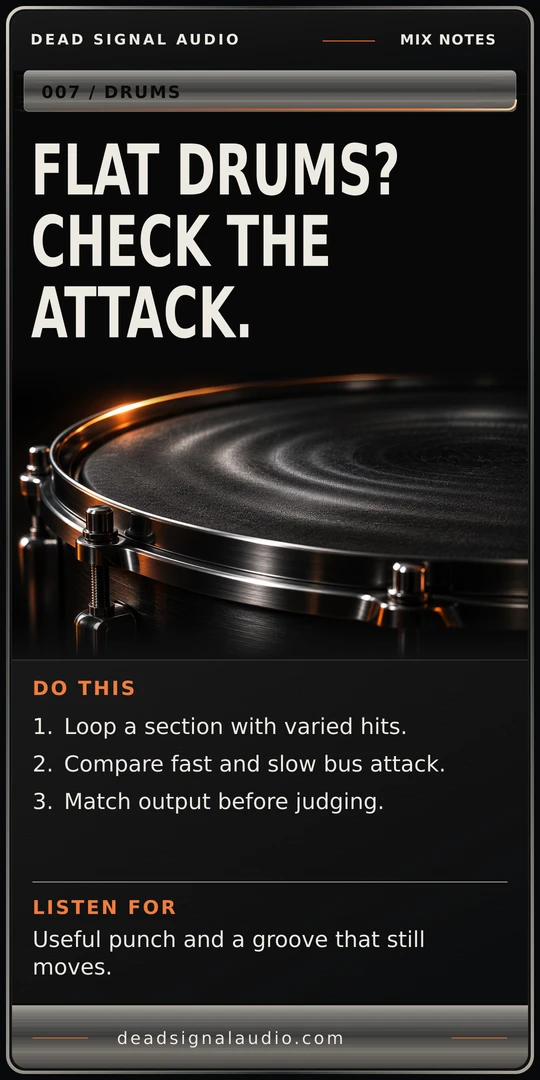
Flat drums? Check your attack.
Fast bus compression can reduce the contrast between hits and sustain.
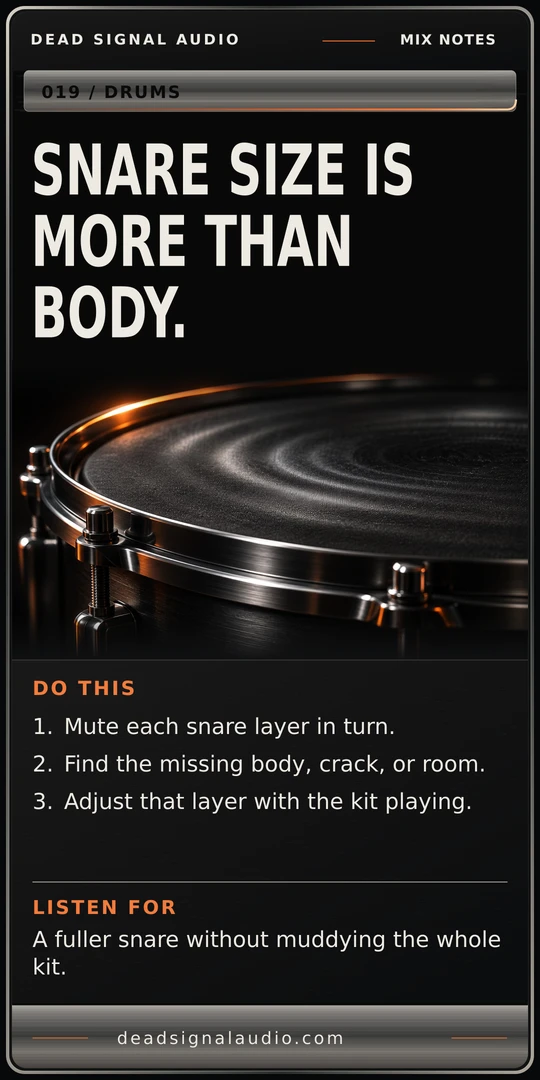
Snare body isn't just 200 Hz.
A small snare may lack body, stick attack, or room contribution.
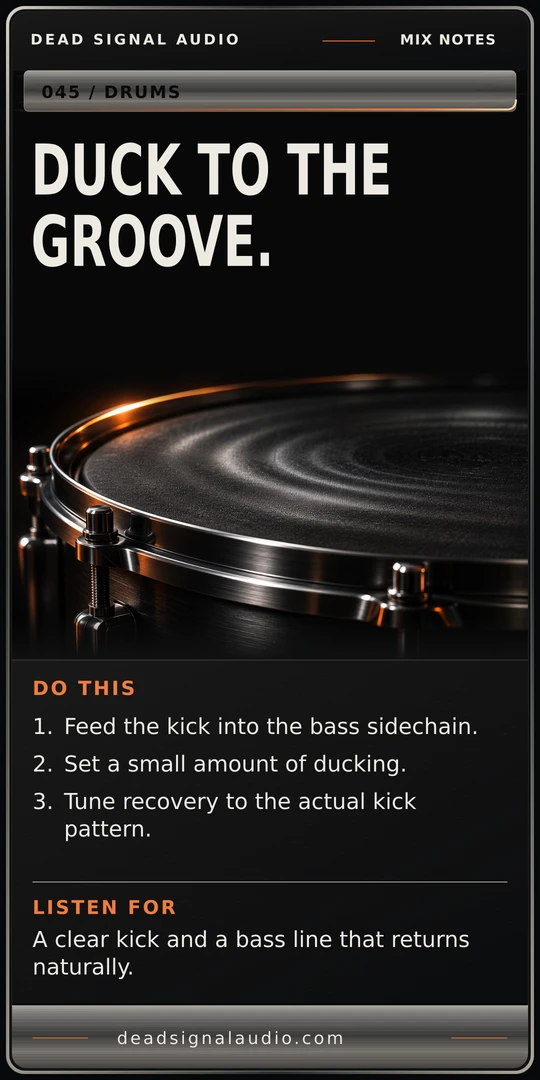
Duck your bass to the kick and the groove.
Ducking can linger into the next note or recover too abruptly.
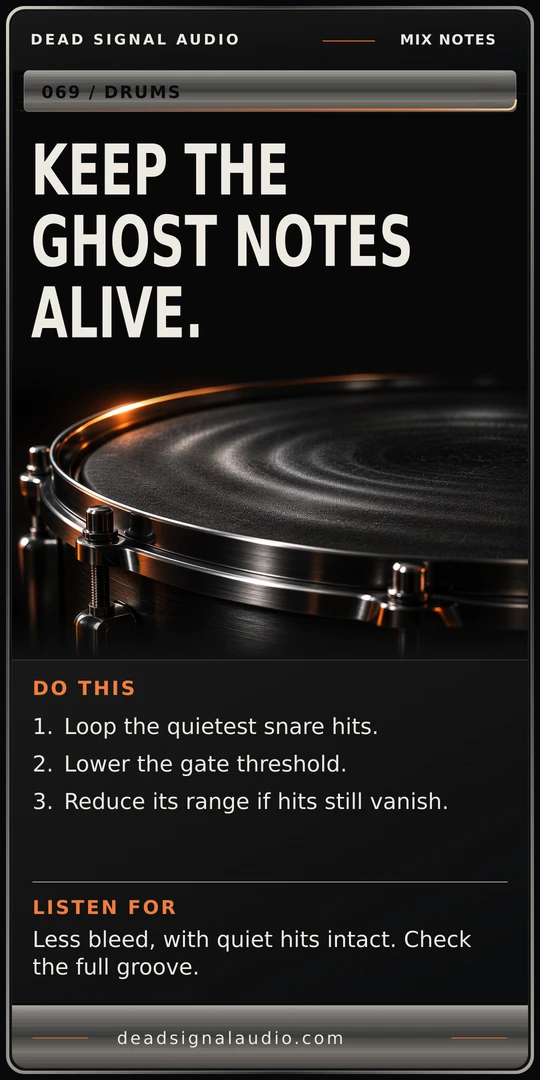
Keep the ghost notes alive
A snare gate removes the notes that make the groove feel human.
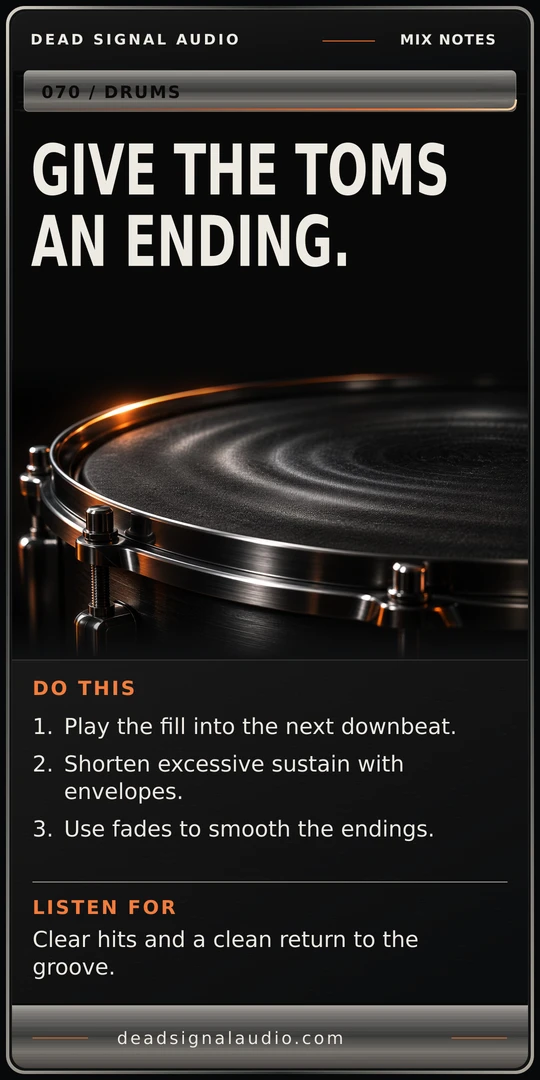
Toms need an ending
Long tom resonance overlaps the next hit and clouds a fast fill.
Overheads are part of the snare
The close mic sounds good, but the combined snare turns thin.
Cymbal wash after the fill
A crash tail fills the next verse and hides the first lyric.
Match the sample's decay
A replacement snare has the right crack but an oversized tail.
Tune the kick tail by ear
A resonant kick competes with the bass line on some notes.
Let the hi-hat move
Every programmed hat lands at identical force and sounds mechanical.
Check the room before adding reverb
A recorded room already contains the size the kit is missing.
Do the kick layers agree?
A sub layer and a click layer combine into an inconsistent hit.
Watch the drum edits breathe
A tight edit cuts through cymbal sustain or room decay.
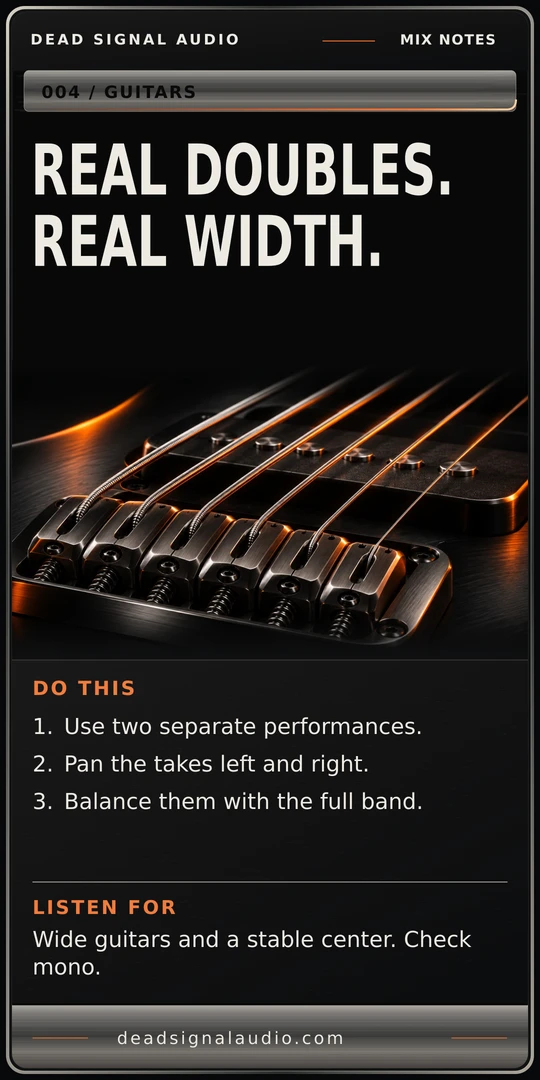
Small guitars? Check your pans first.
Two good performances can lose their stereo separation when stacked in the center.
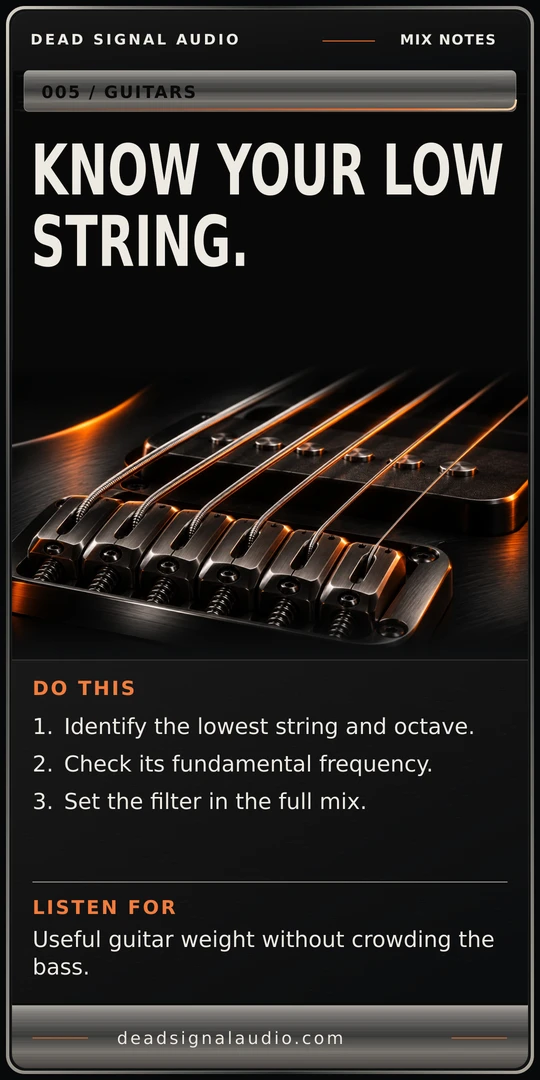
Where your low string actually lives.
An arbitrary high-pass can remove useful low-string weight.
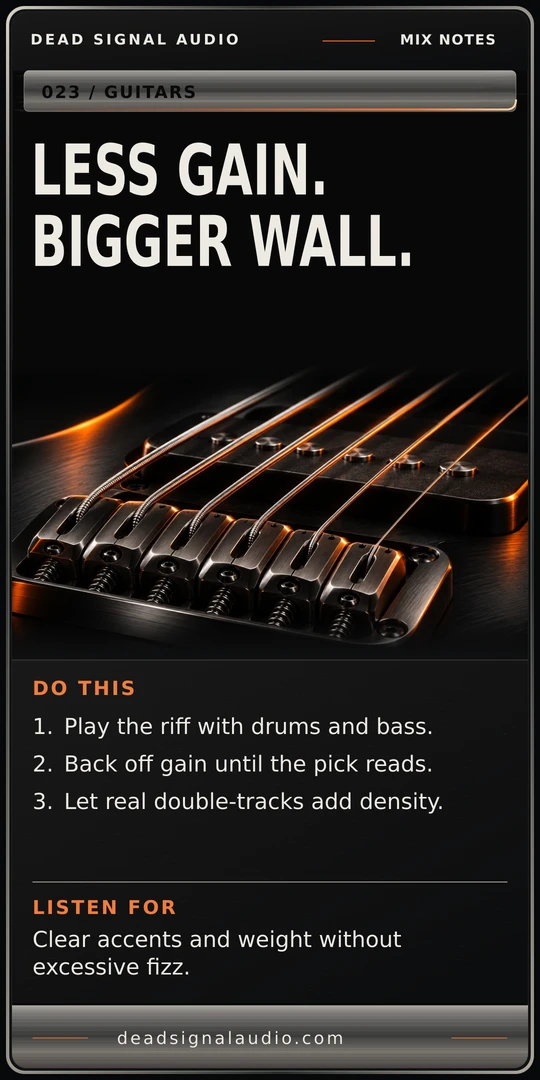
Lower gain, bigger wall.
Excess distortion can blur pick definition and crowd cymbals and vocals.
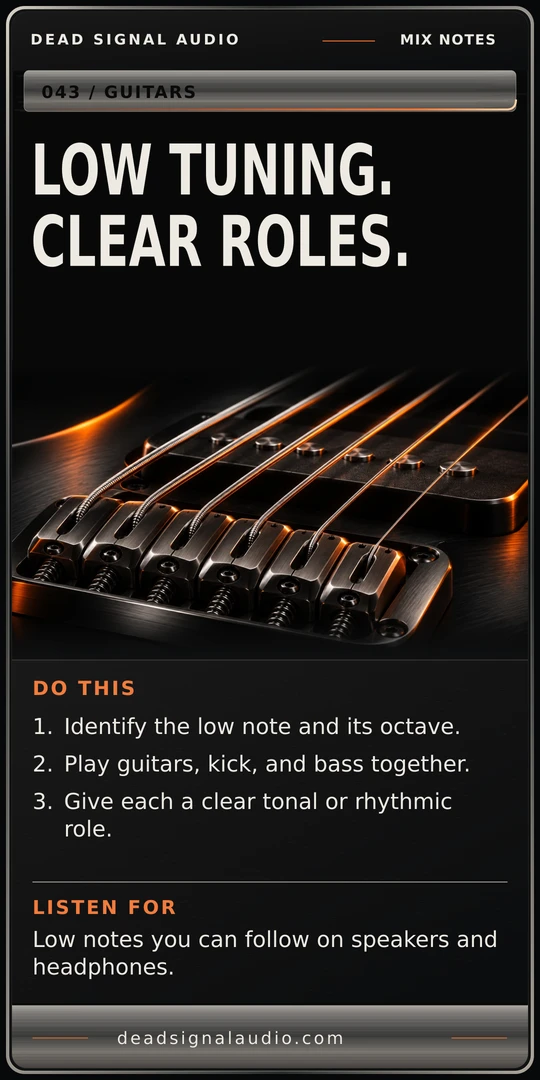
7 and 8 string low strings, in hertz.
Extended-range guitars can overlap kick and bass deep in the low end.
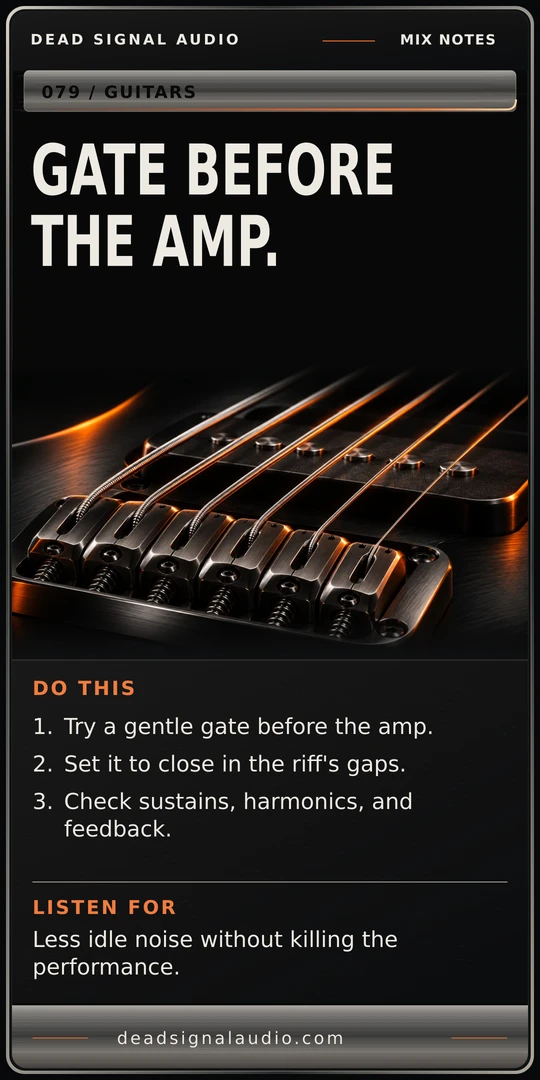
Gate before the amp, then listen again
High gain magnifies noise between riffs.
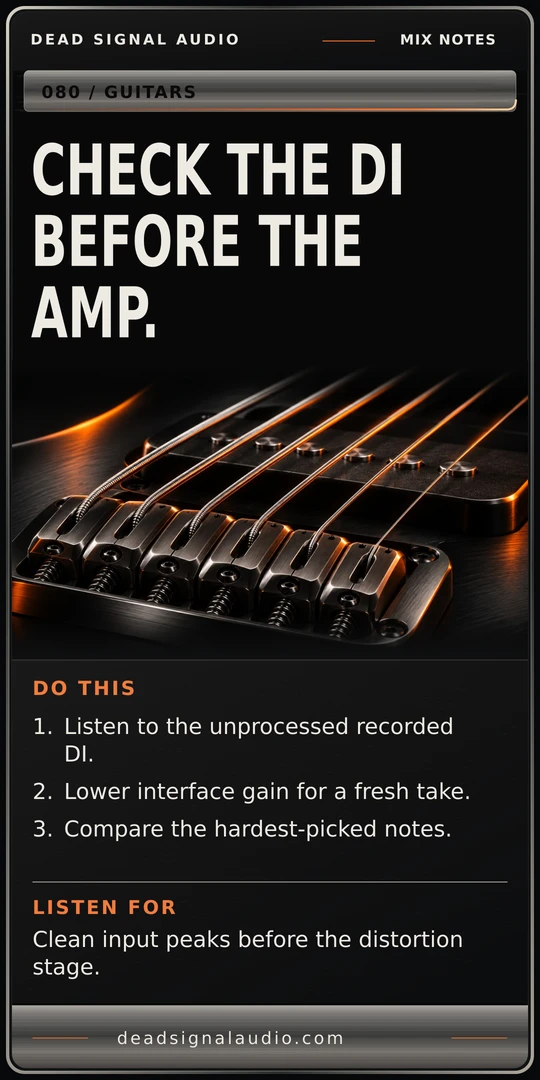
The DI can clip before the plugin
A distorted input feeds every later amp choice the same damaged signal.

Choose the cab before surgical EQ
A cabinet response can create the harshness you keep cutting.
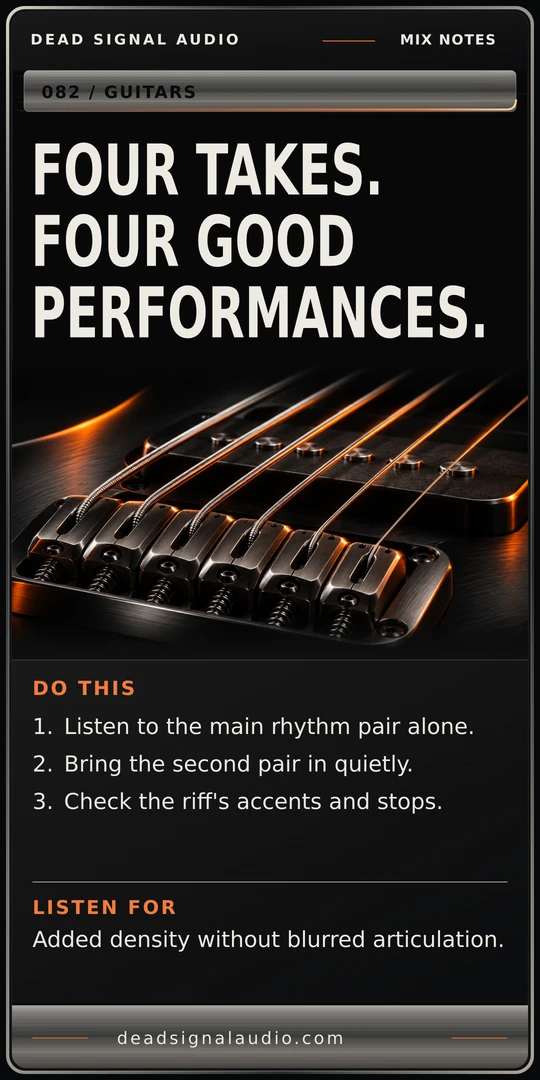
Four takes need four good performances
Quad tracks increase density but can blur accents and stops.
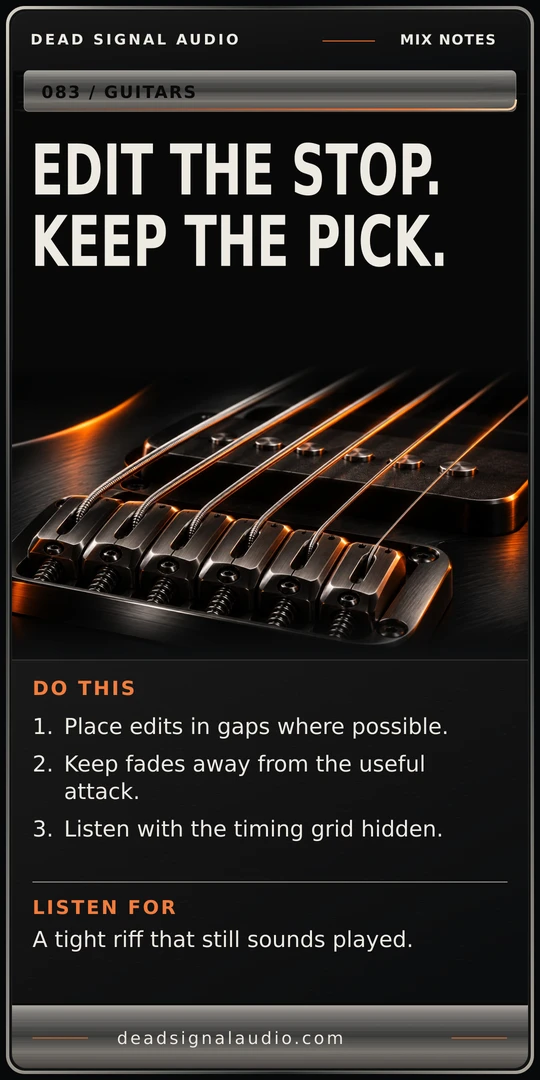
Edit the stop, keep the pick
Tightening a riff can accidentally soften the start of each chug.
Bass distortion needs a foundation
A full-range drive makes the bass gritty but removes stable low-end weight.
A lead needs a different lane
The lead disappears because it shares the rhythm guitars' tone and position.
The re-amp return arrives late
Blending a DI-derived hardware return with another path creates comb filtering.
Tighten the left and right endings
A riff stops on one side while the other keeps ringing.
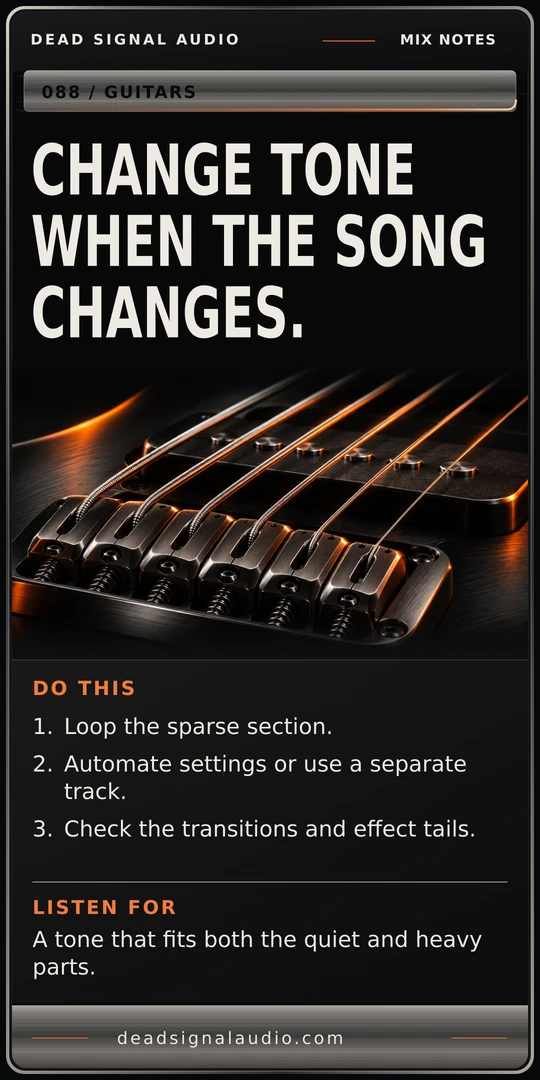
Change tone for the quiet section
A clean or sparse passage exposes processing that worked in the wall of guitars.
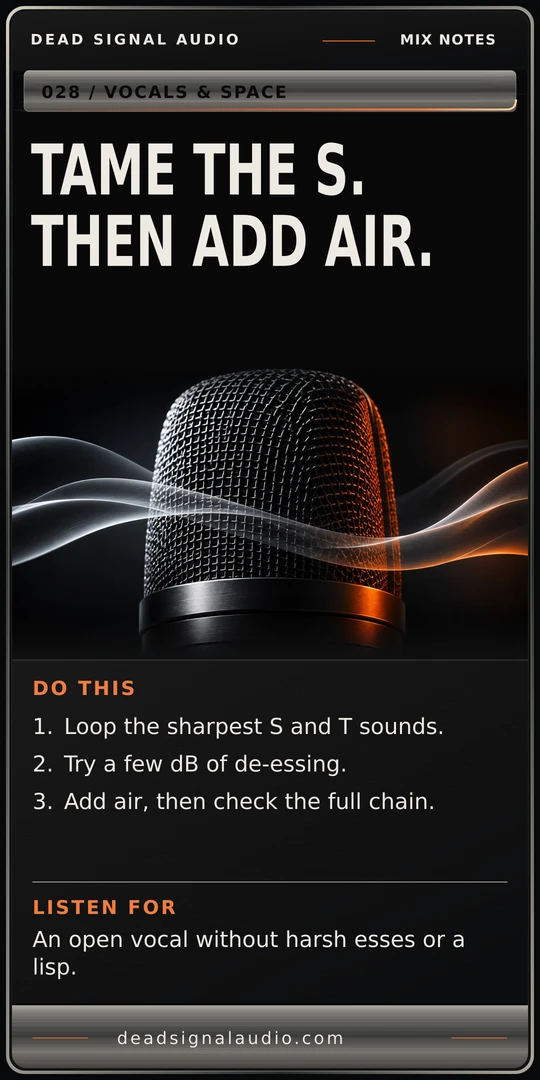
De-ess before you add air.
A bright shelf can make an already sharp S sound painful.
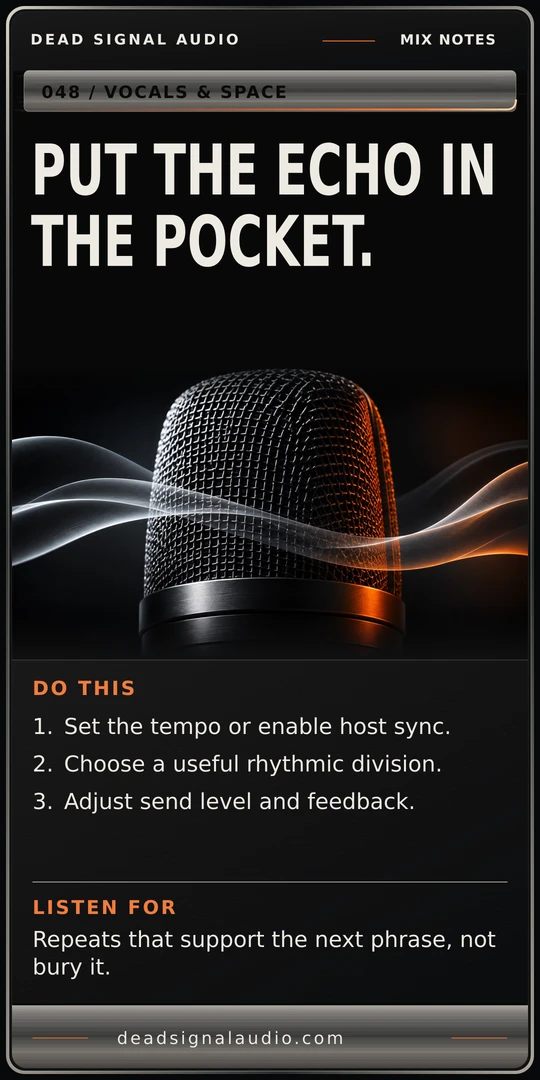
Delay times for every tempo.
A delay can overlap the next phrase when its rhythmic placement is wrong.
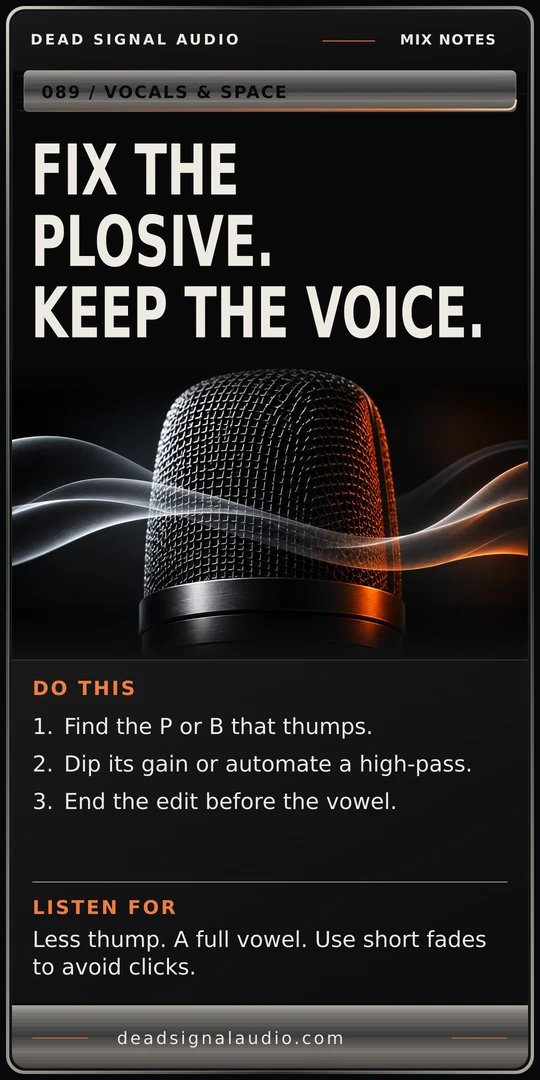
Plosives need a local fix
A few P and B sounds trigger low-frequency thumps.
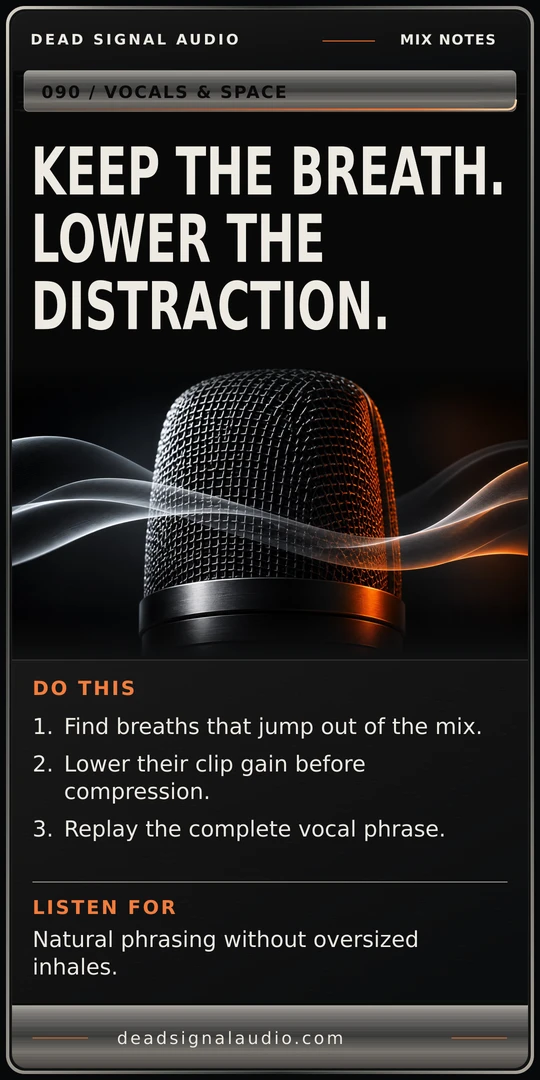
Breaths are part of the phrasing
Compression makes every inhale as loud as the lyric.
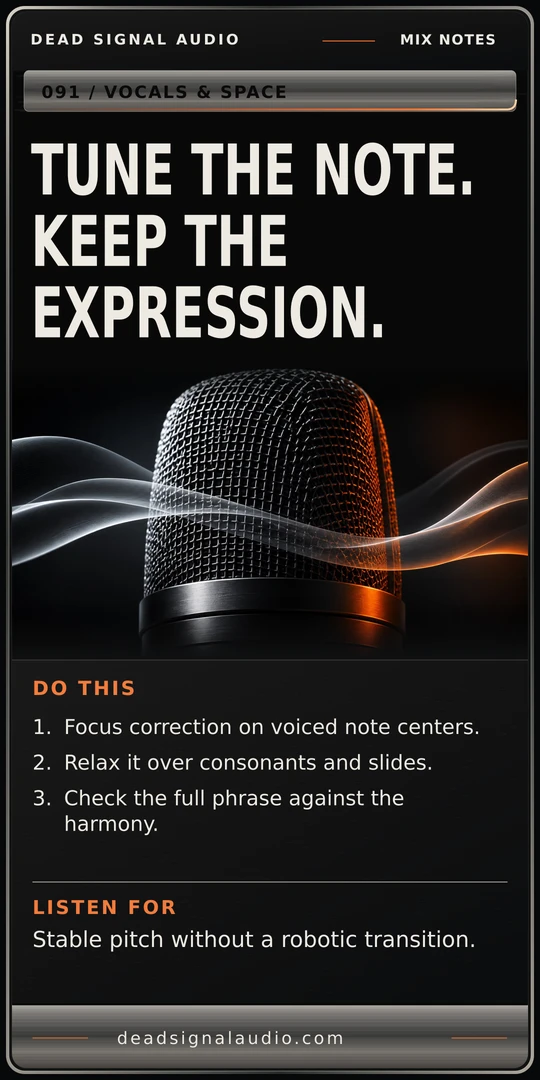
Tune the note, not the consonant
Pitch correction warbles across unvoiced sounds and transitions.
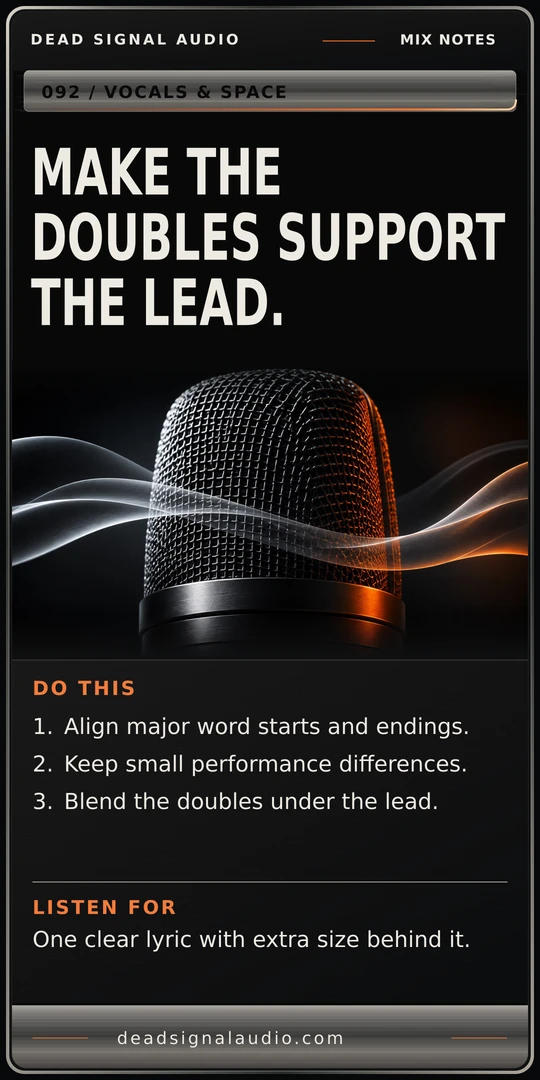
Doubles should support the lead
Doubled words arrive late and obscure the main consonant.
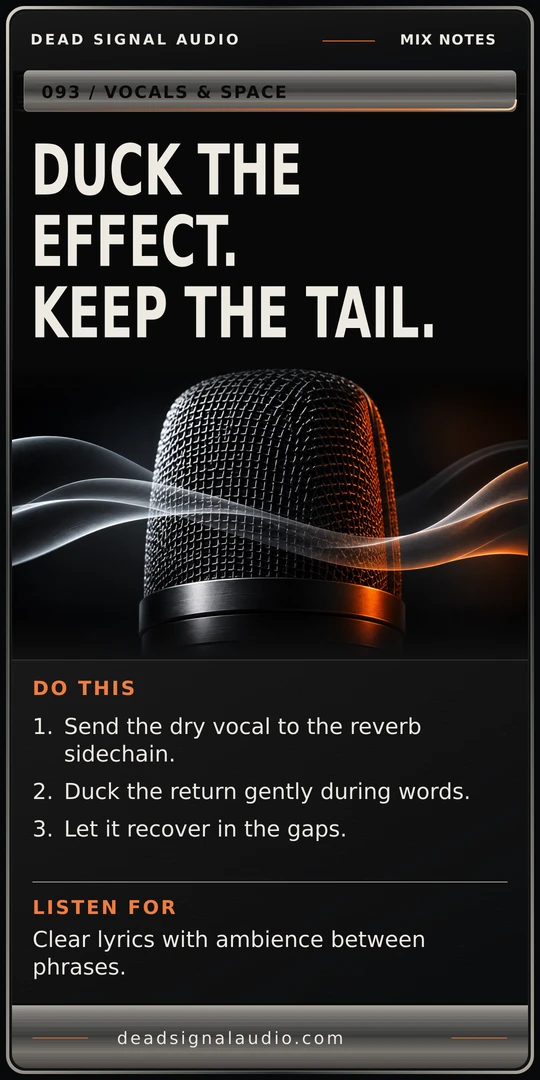
Duck the effect, keep the tail
A beautiful reverb masks words while the singer is active.
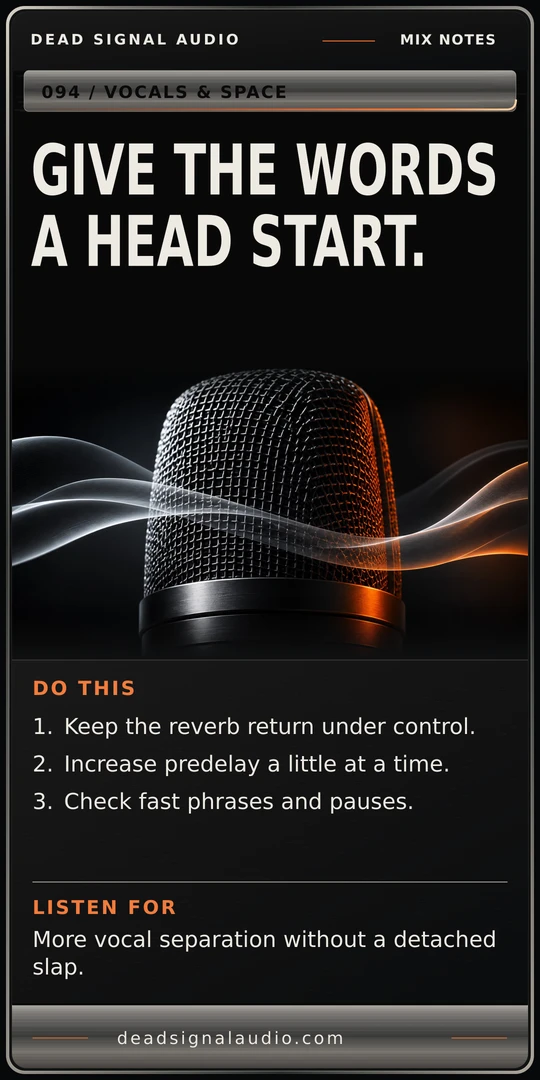
Predelay makes room for words
Reverb arrives immediately and pushes the singer backward.
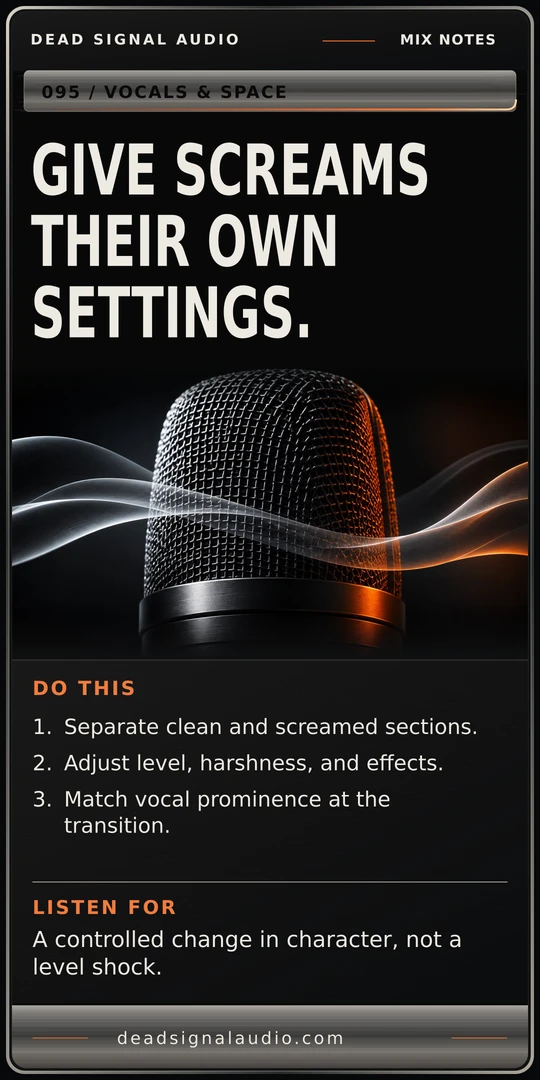
Keep screams from setting the whole chain
A screamed section overwhelms settings that suit the clean vocal.
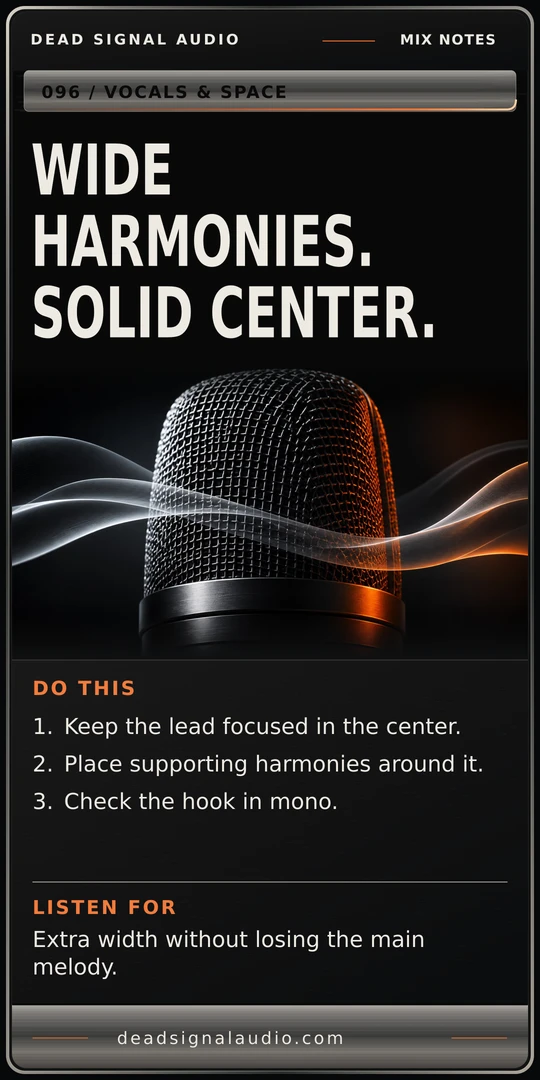
Harmony width needs a center
Wide harmonies sound impressive but the melody loses its anchor.
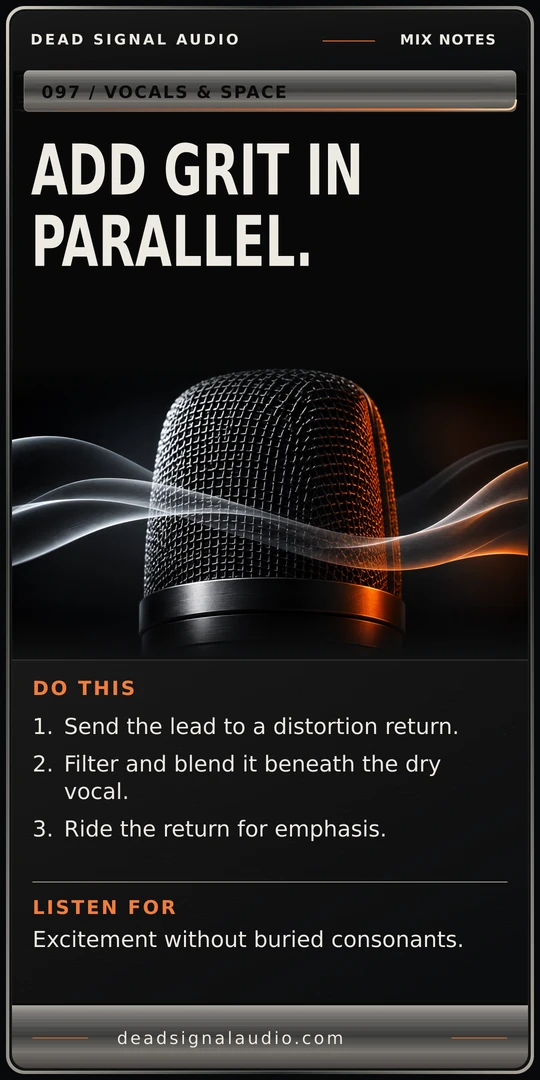
Distort a vocal in parallel
Full-range distortion adds excitement and destroys intelligibility.
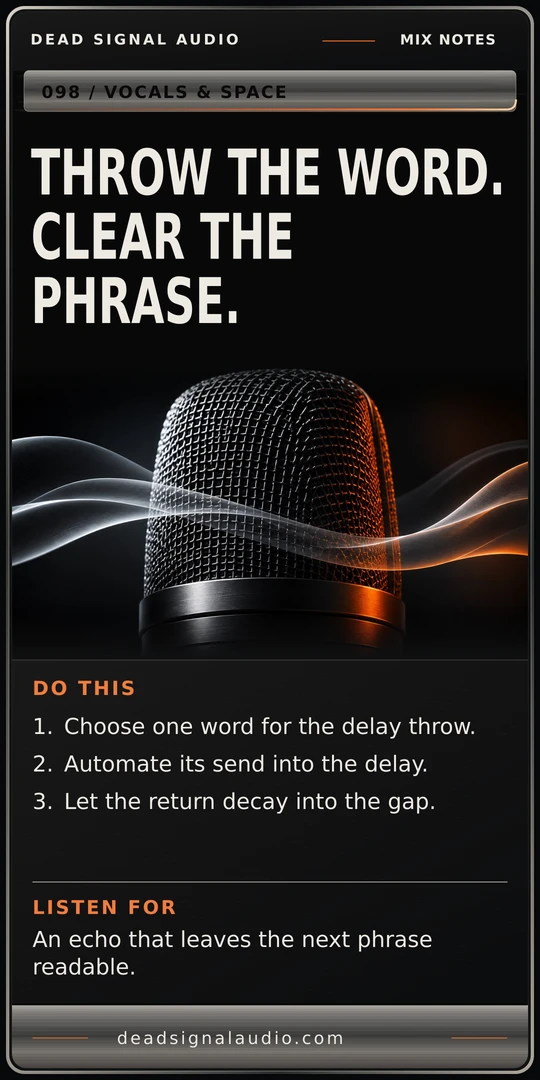
Throw one word, not the whole sentence
A constant delay crowds a quick vocal.
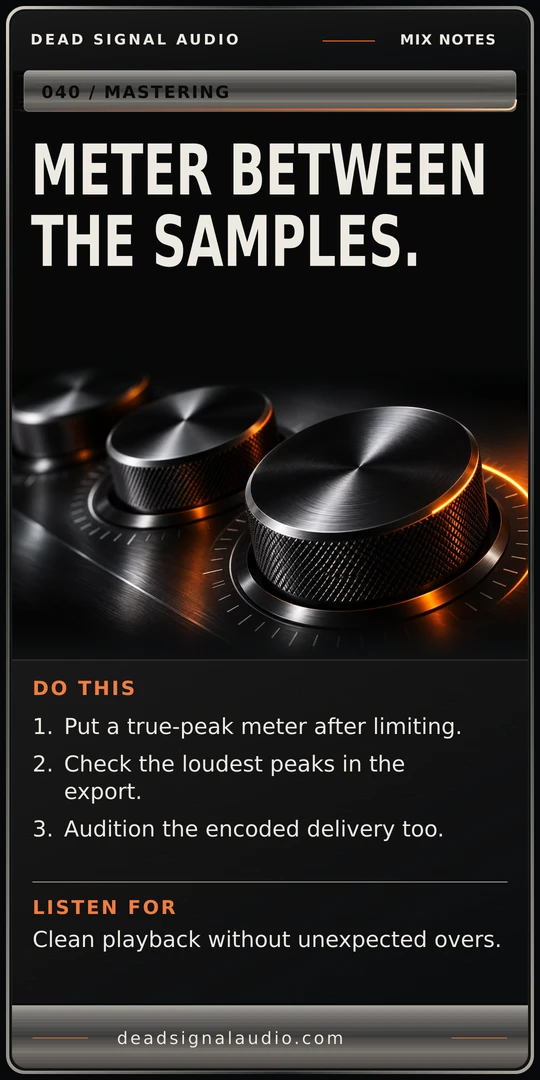
Your peak meter can miss intersample peaks.
Sample peaks do not necessarily capture the highest reconstructed signal level.
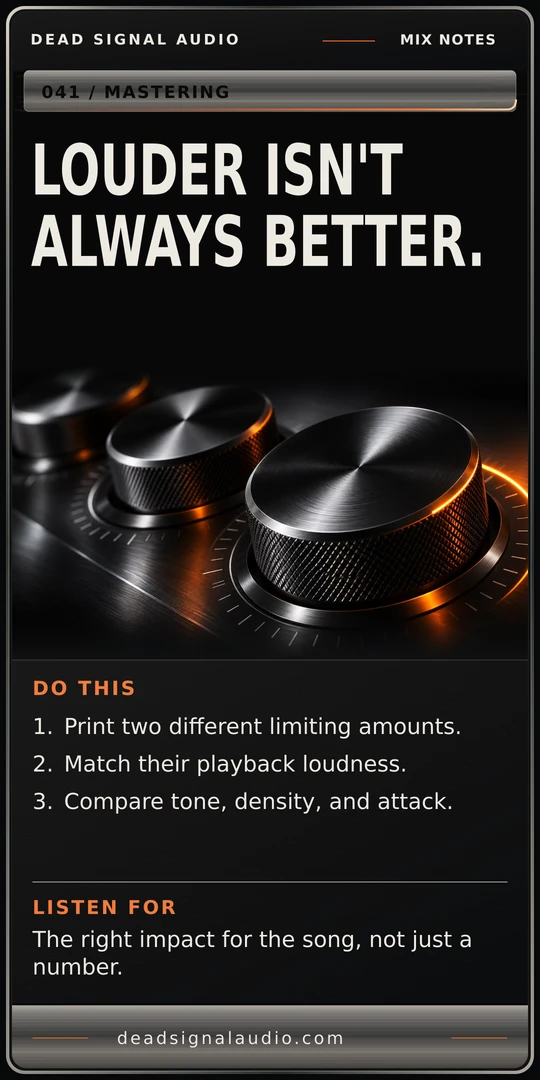
Your loud master can get turned down.
Loudness normalization can reduce a loud master without restoring dynamics lost to limiting.
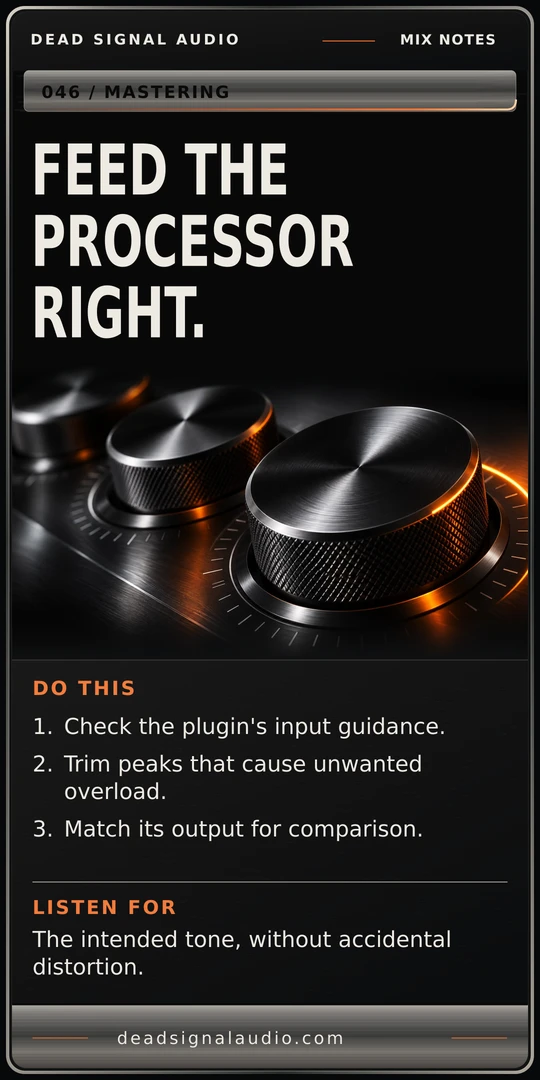
Gain stage for the processor.
Nonlinear processors can change character as input level changes.
Check the file you actually exported
A session sounds right but the delivered file has a clipped intro or missing tail.
The reference needs a bypass route
A mastered reference passes through your bus limiter and sounds misleading.
Dither belongs at the final reduction
Repeated bit-depth changes make the delivery chain harder to control.
Check the encoded version
A lossless master behaves differently after lossy conversion.
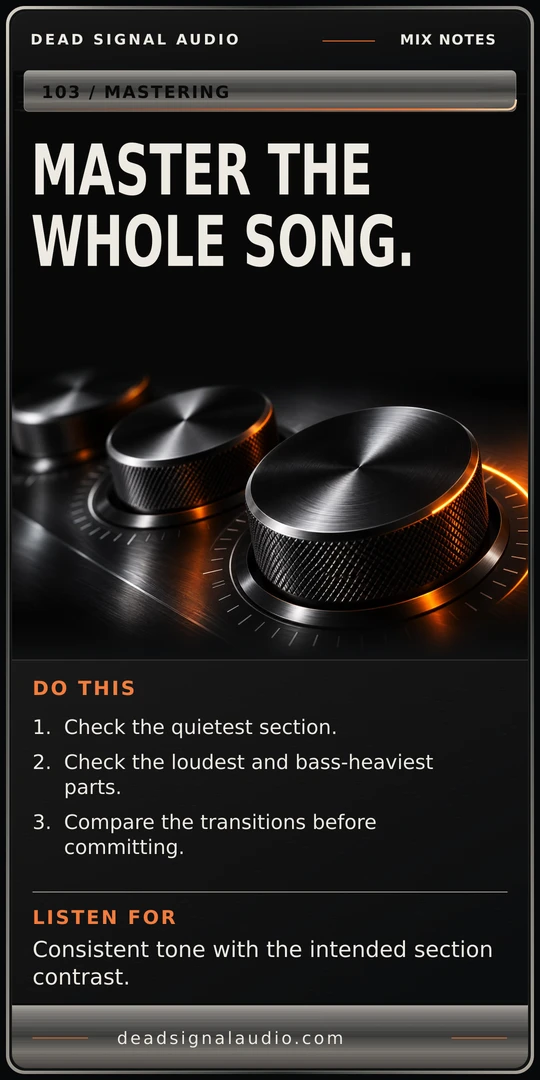
Don't master only the chorus
A loud section sets the chain, but the verse pumps or turns brittle.
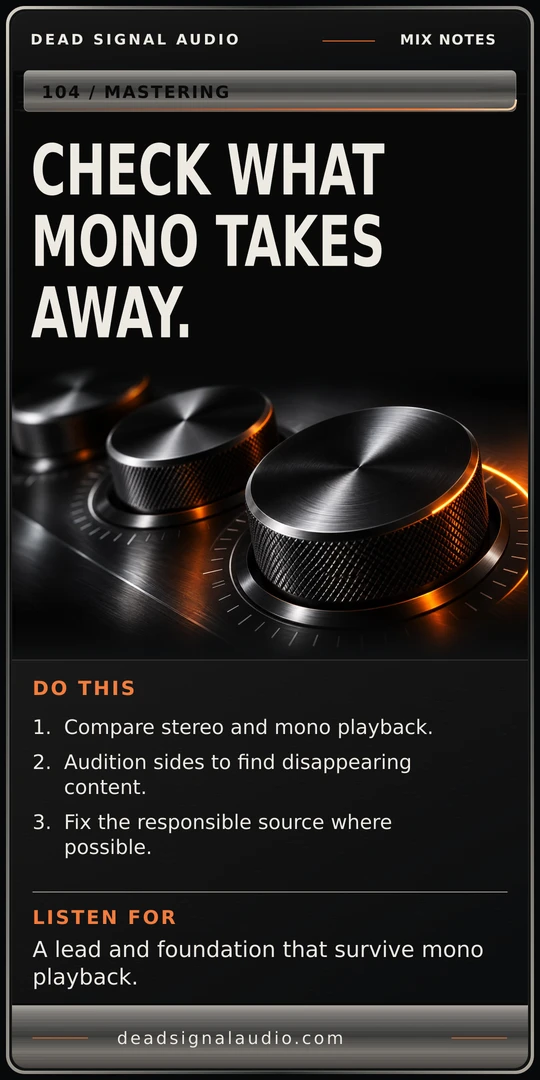
The side channel can hide a problem
A stereo master feels fine until mono playback loses a key instrument.
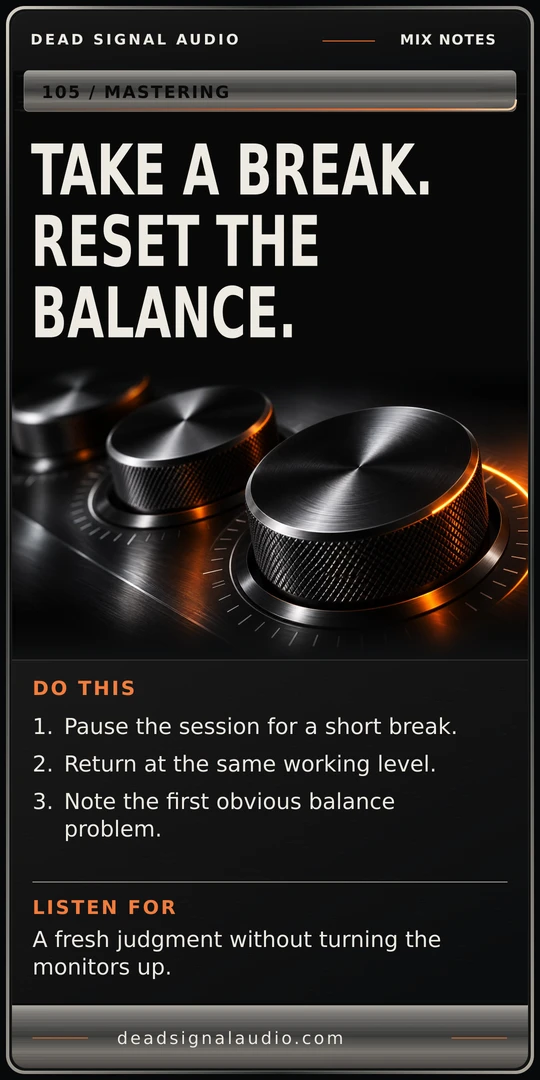
Use short breaks to reset your balance
After repeated listening, harshness starts to feel normal.
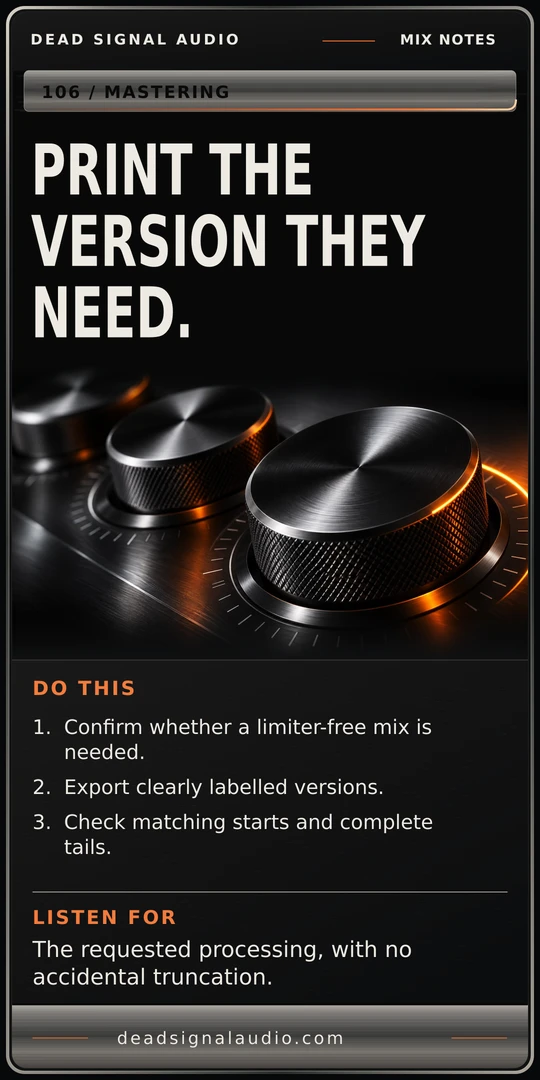
Print an alternate without the limiter
A final limiter may be useful for presentation but unsuitable for another mastering step.
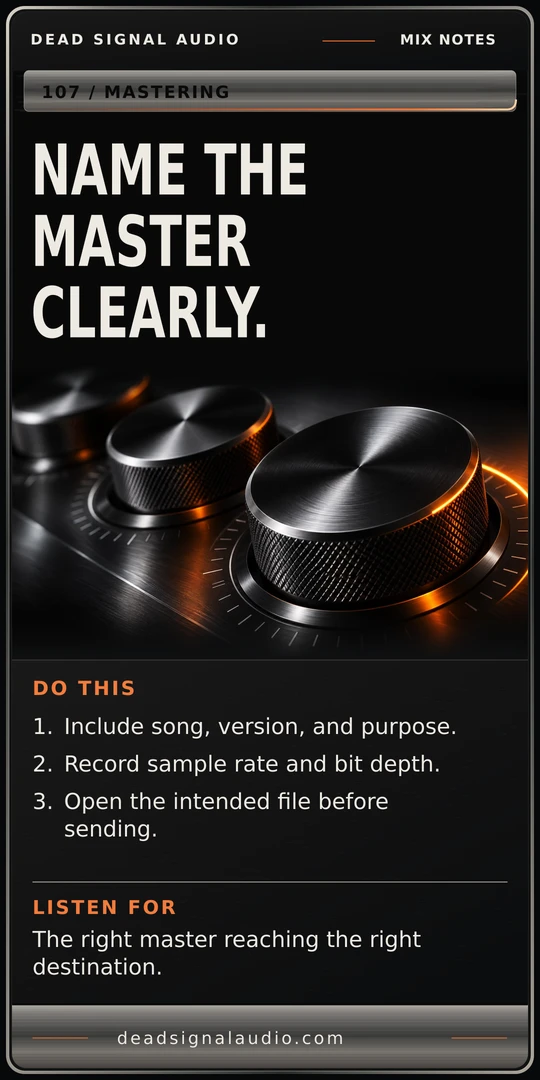
Name the master so nobody guesses
Several files named final create a delivery mistake.
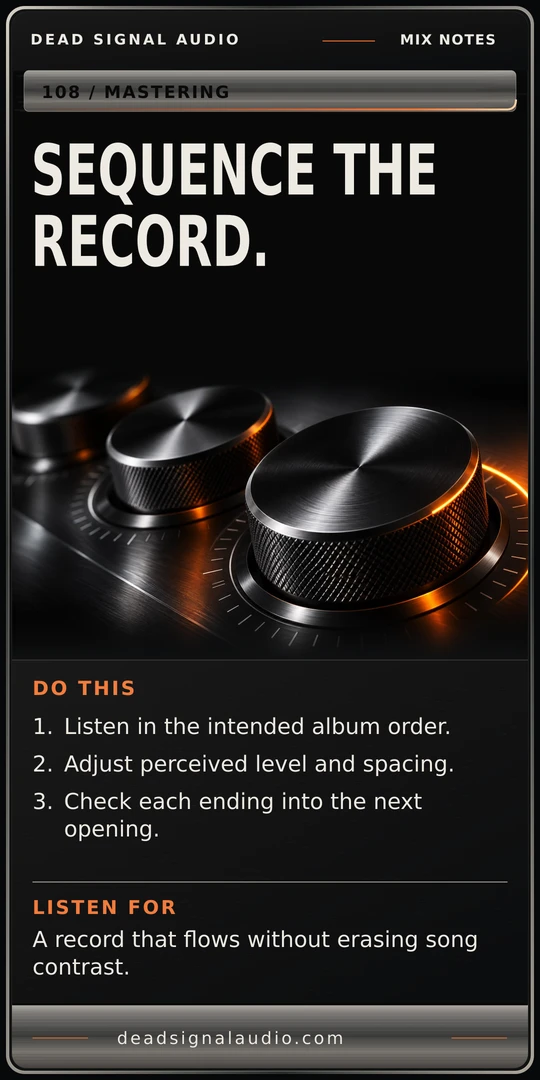
Sequence the record, not just the songs
Individually balanced masters feel inconsistent when played together.
No notes match that search.
Get mix notes in your inbox.
New notes, workflows and plugin tips, plus a free mixing cheat sheet right now.